
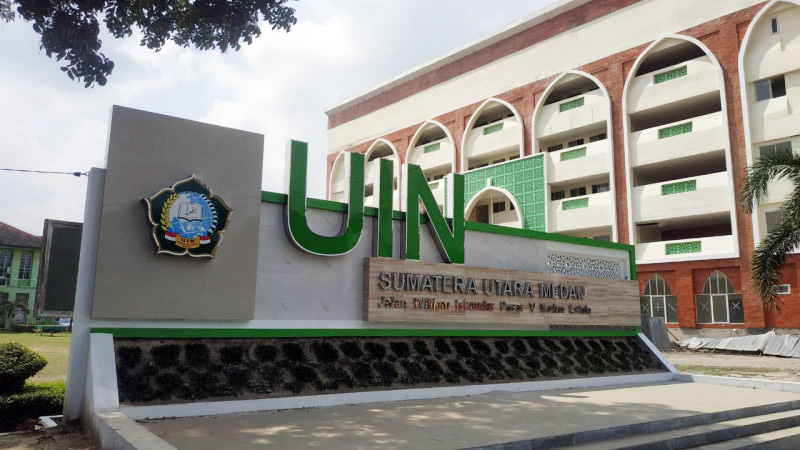
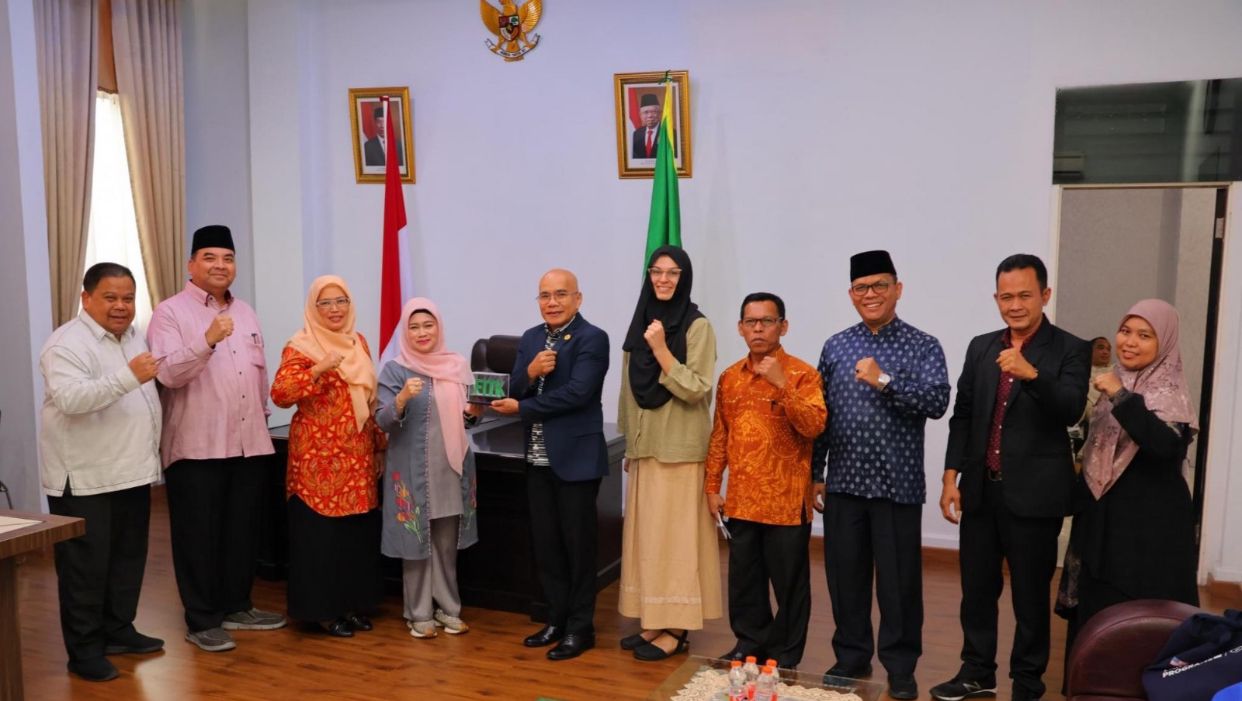
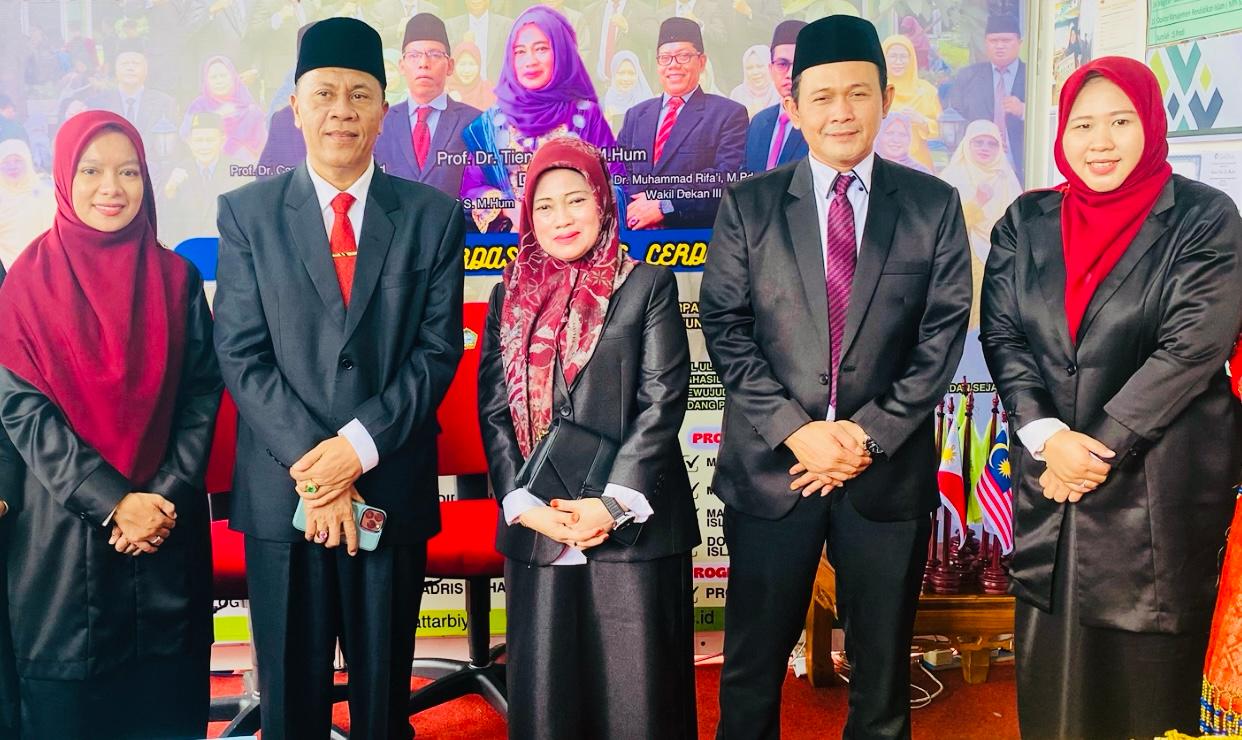

Medan, Indonesia, August 11, 2025 – The Faculty of Tarbiyah and Teacher Training (FITK) at the State Islamic University of North Sumatra (UIN Sumatera Utara) marked a milestone with the official 2025 Curriculum Update program. The event, held in the FITK main auditorium, gathered academic leaders, program heads, and faculty members from across the institution to explore an ambitious vision for higher education, one that is deeply rooted in character building, critical thinking, and meaningful learning.
The gathering was attended by the entire faculty leadership, department managers, and prominent academic figures, including Maslathif Dwi Purnomo, PhD., Head of the Master’s Program in English Education (MTBI) and Reflina, M.Pd., Secretary of the MTBI Program. Also central to the program was Prof. Dr. Candra Wijaya, M.Pd., Vice Dean I of FITK, who served as the keynote speaker.
The event’s theme “Impactful Campus, Love-Based Curriculum, and Deep Learning for the Future of Education” reflected a transformative educational philosophy aimed at addressing the evolving demands of the 21st century.
Opening his address, Prof. Dr. Candra Wijaya emphasized that a university should not merely be a place to transfer knowledge, but a fundamental agent of change in society.
“Our role as educators is not limited to teaching subjects. We are shaping human beings who will navigate a rapidly changing world, face complex global challenges, and carry the responsibility of contributing positively to society,” he stated.
His remarks underscored the critical role of higher education in cultivating adaptive, empathetic, and forward-thinking graduates capable of thriving in an interconnected and competitive global environment.
At the heart of this year’s update is the “Kurikulum Cinta” or Love-Based Curriculum, an innovative educational framework designed to prioritize character development, experience-based learning, and holistic socio-emotional growth.
Prof. Candra explained that this approach envisions students not only as recipients of academic knowledge but as humanistic, nationalist, naturalist, and tolerant individuals who place love at the core of their principles and interactions.
He elaborated:
“The Love-Based Curriculum is not about adding new courses for the sake of novelty. It’s about embedding compassion, empathy, and human values into every aspect of the learning process. It’s about teaching students to lead with the heart as well as the mind.”
This approach aligns with broader global education reforms that stress the importance of social-emotional learning (SEL), ethical reasoning, and the ability to connect academic knowledge with real-world human needs.
Another key component of the 2025 curriculum renewal is the integration of deep learning methodologies, approaches that emphasize critical thinking, creativity, and problem-solving over rote memorization.
According to Prof. Candra, deep learning is essential for producing graduates who are not only knowledgeable but also capable of innovation and sustained intellectual growth.
He explained that deep learning equips students with:
- The ability to analyze complex issues from multiple perspectives
- Skills to connect interdisciplinary knowledge
- Motivation to engage in lifelong learning
- The capacity to apply knowledge ethically in diverse contexts
“Our mission is to ensure that learning is not just about passing exams, but about making a real and lasting impact on society,” Prof. Candra stressed.
Adding to the significance of the event was the presence of Dr. Maslathif Dwi Purnomo, PhD., Head of the Master’s Program in English Education (MTBI). Dr. Maslathif, who has been actively engaged in curriculum innovation for graduate programs, expressed his strong support and affirmed that MTBI is ready to fully support FITK’s 2025 curriculum update.
“Curriculum updates are not optional anymore; they are an inevitable necessity,” Dr. Maslathif remarked. “With the rise of new frameworks like the Love-Based Curriculum, we must ensure that our academic programs evolve to meet both national education goals and global standards — and MTBI stands ready to contribute to that mission.”
He further noted that integrating character education with academic rigor creates a more balanced and impactful learning environment, preparing graduates for both professional success and responsible citizenship. He emphasized that MTBI’s resources, expertise, and commitment will be directed toward ensuring the successful implementation of this curriculum renewal.

Faculty of Tarbiyah and Teacher Training Launches 2025 Curriculum Update Focused on Love based Education and Deep Learning for the Future
The curriculum update is the result of extensive collaboration between faculty leaders, program heads, and curriculum development teams. Throughout the day, participants engaged in workshops and discussion sessions to refine program structures, align learning outcomes with the Love-Based Curriculum philosophy, and explore innovative teaching methodologies.
The agenda included:
- Reviewing current curriculum frameworks and identifying gaps
- Integrating socio-emotional and ethical dimensions into existing courses
- Adopting project-based and experiential learning models
- Aligning assessment methods with deep learning principles
By the conclusion of the event, a collective agreement was reached to implement the updated curriculum starting in the upcoming academic year, with pilot programs and faculty training sessions planned for the following months.
This 2025 curriculum update marks a significant shift in Indonesian higher education, particularly in the field of teacher training. By prioritizing impact, compassion, and depth of learning, FITK aims to produce educators who will inspire and lead future generations.
The initiative also resonates with broader educational reform efforts across the country, where the emphasis is shifting from content-heavy syllabi toward student-centered, values-driven education. The Love-Based Curriculum complements these reforms by introducing a holistic, human-centered philosophy that places emotional intelligence and moral integrity alongside academic competence.
As the event drew to a close, both Prof. Candra and Dr. Maslathif expressed optimism about the road ahead. They called upon all faculty members to embrace their role as mentors, innovators, and role models in shaping the next generation of Indonesian educators.
In his closing remarks, Dr. Maslathif reiterated the importance of continuous curriculum renewal:
“Education is a living system. It must evolve, adapt, and grow with the times. The Love-Based Curriculum is a powerful step in that direction.”
With the launch of the updated curriculum, FITK UIN Sumatera Utara sets a compelling example for other higher education institutions in Indonesia, demonstrating that transformational change is possible when academic vision is matched with commitment, collaboration, and a shared sense of purpose.