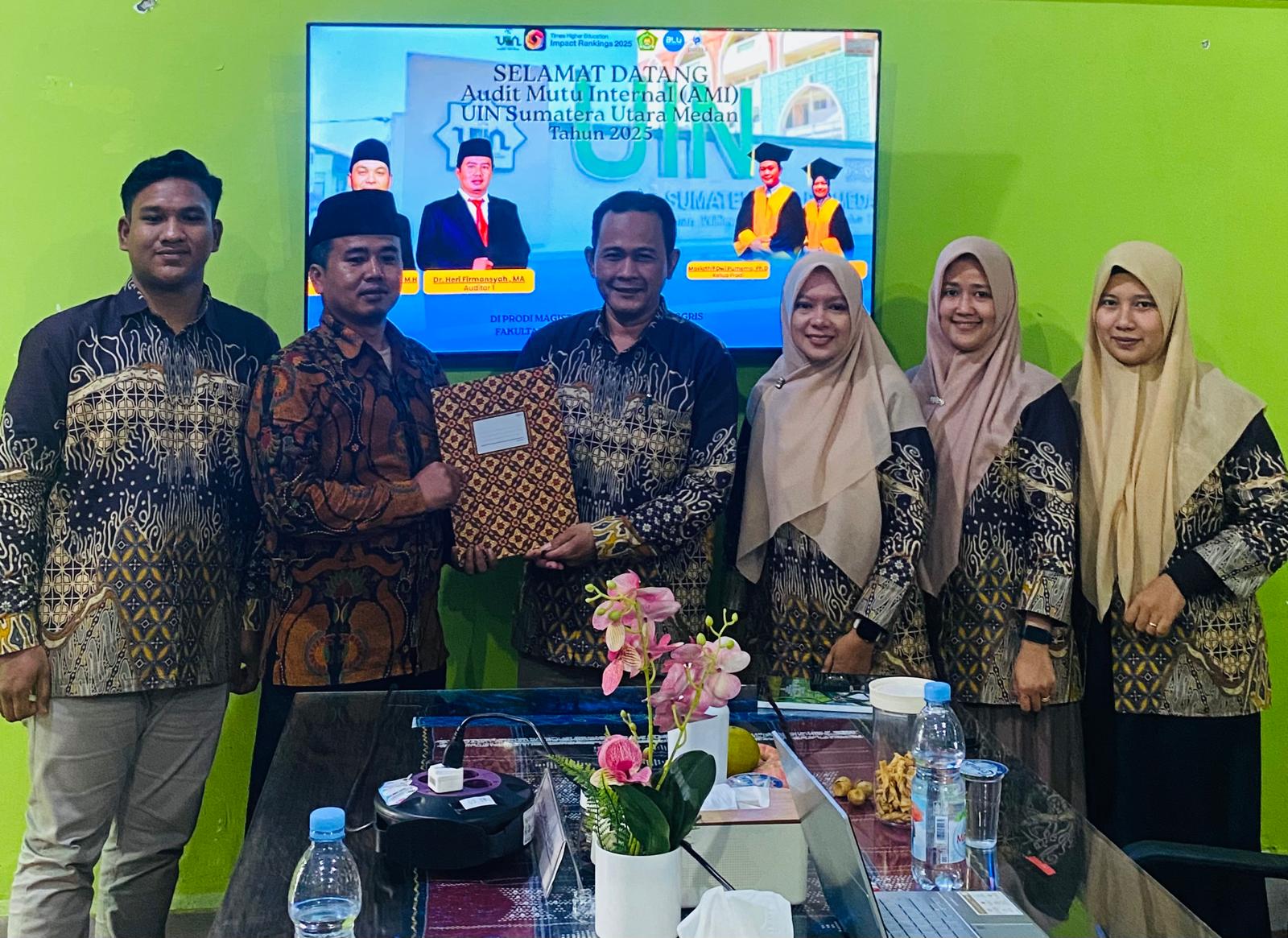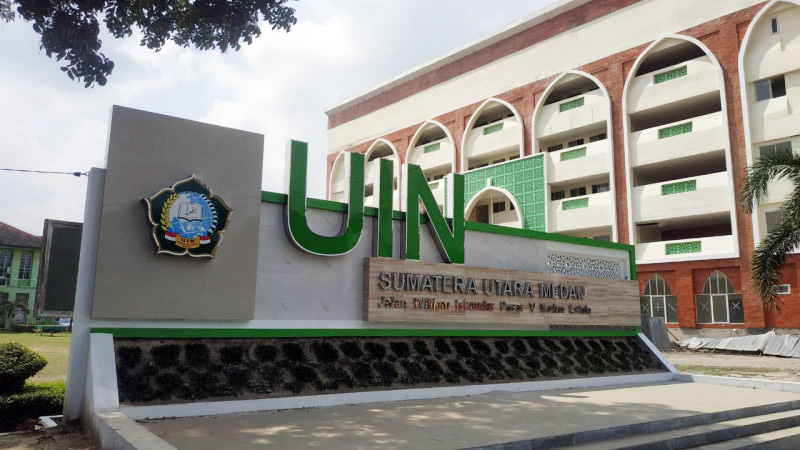
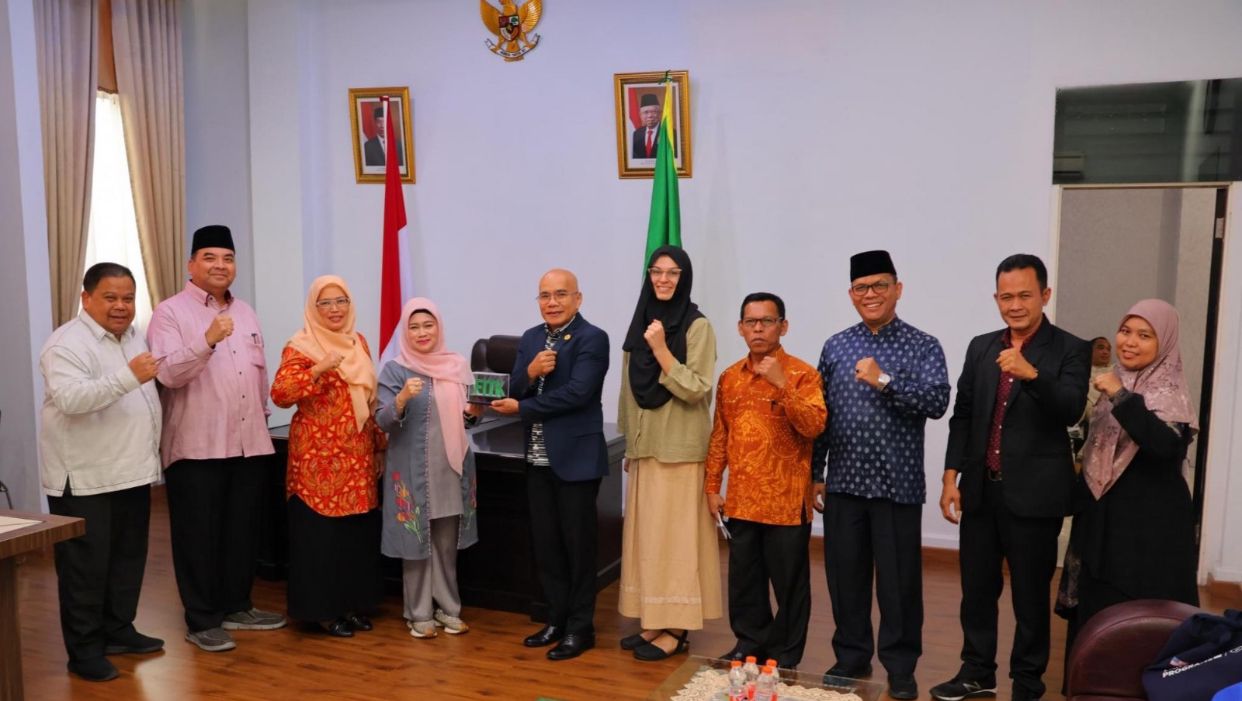
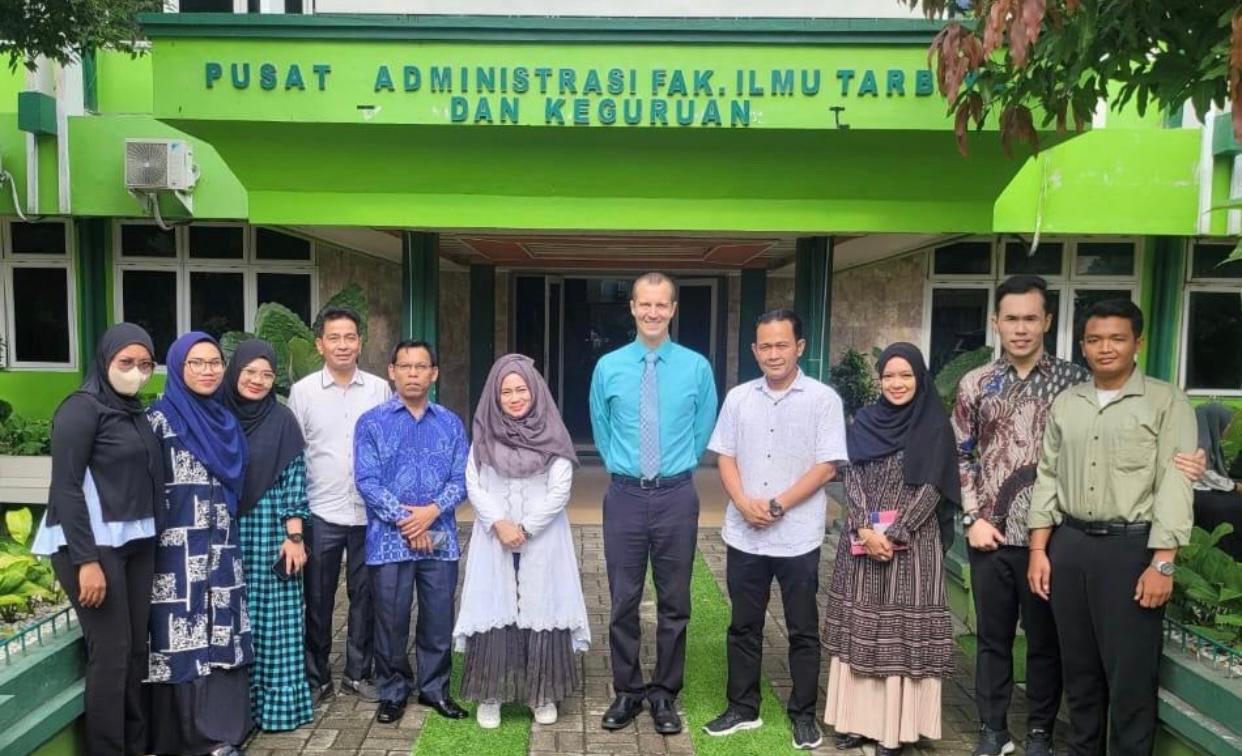
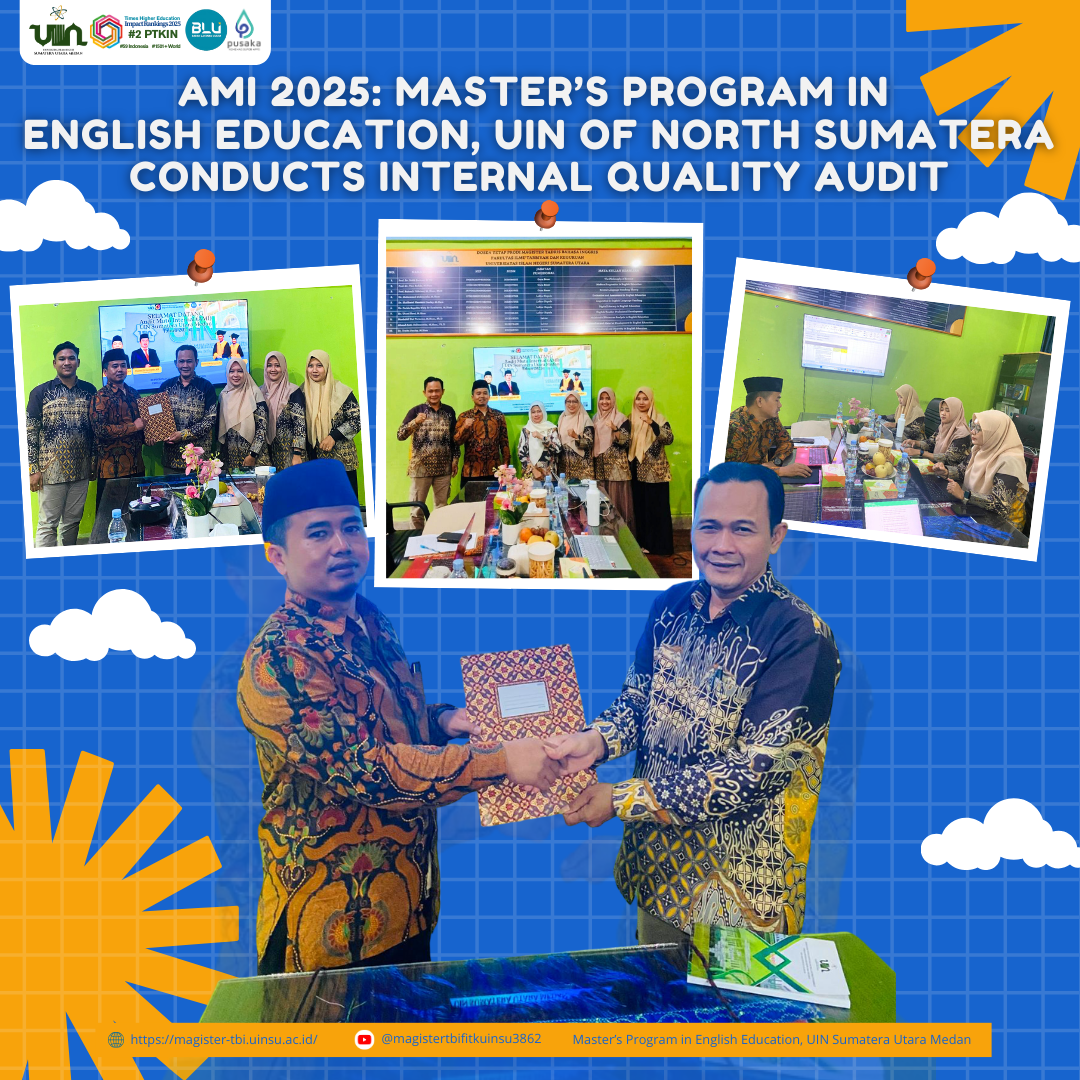
Medan, December 17, 2025 — The Master’s Program in English Education, Faculty of Tarbiyah and Teacher Training (FITK), Universitas Islam Negeri (UIN) Sumatera Utara, successfully conducted an Internal Quality Audit (Audit Mutu Internal/AMI) on Wednesday, December 17, 2025. The audit is part of the university’s continuous effort to strengthen academic governance, ensure compliance with quality standards, and support the realization of a competitive and excellent higher education institution.
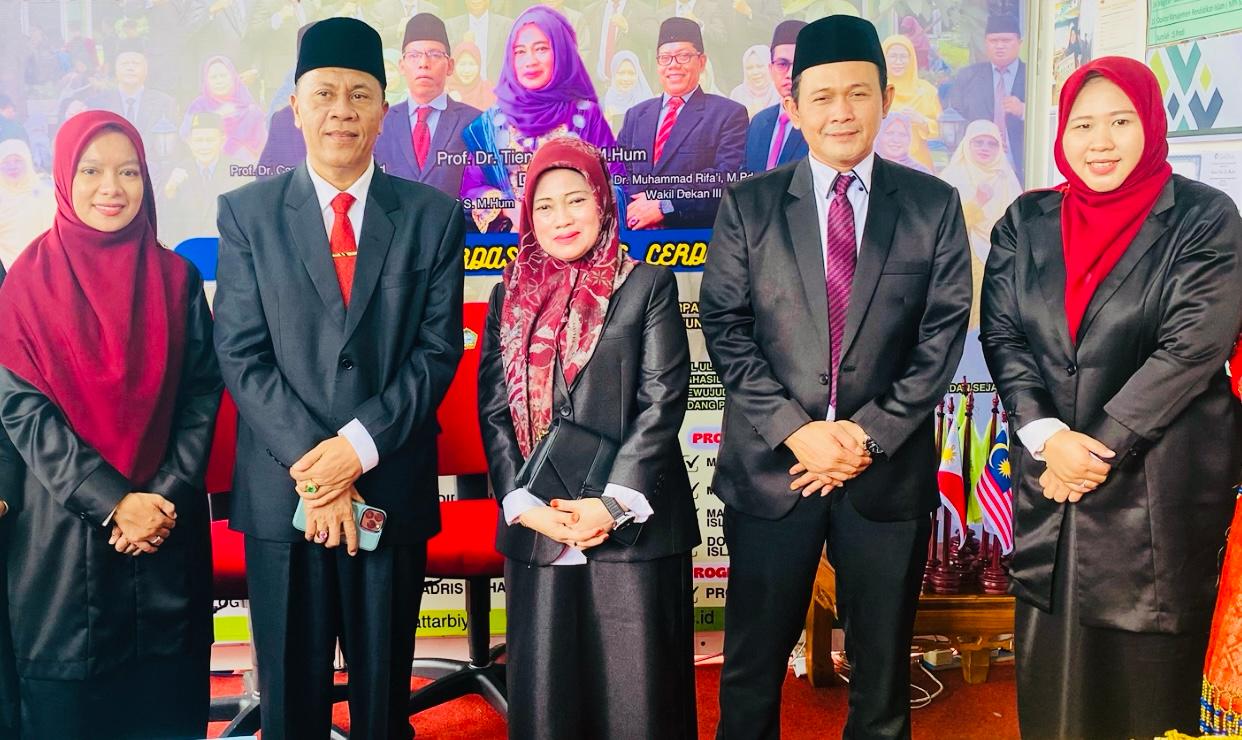
The Internal Quality Audit was carried out by two senior auditors of UIN Sumatera Utara, Dr. Heri Firmansyah, M.A., and Dr. Mhd. Yadi Harahap, S.H.I., M.H., both of whom are experienced lecturers and quality assurance practitioners within the university. The audit focused on academic governance, learning implementation, documentation, and quality assurance practices within the Master’s Program in English Education. It also examined how the program applies internal quality standards in line with UIN Sumatera Utara’s quality assurance system and national higher education regulations.
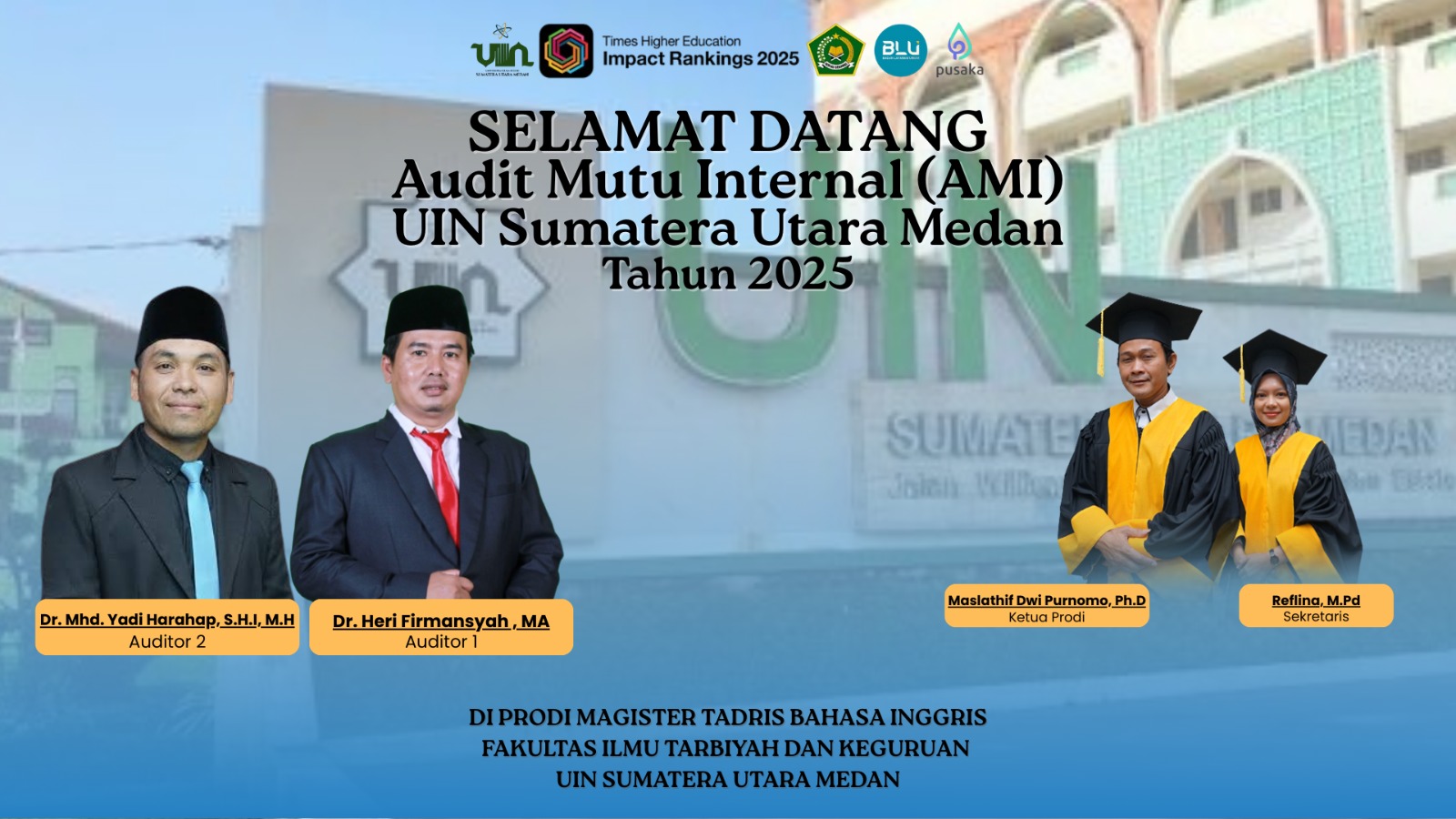
The Internal Quality Audit (AMI) 2025 officially began with an Opening Ceremony and Welcome Remarks delivered by Prof. Dr. Tien Rafida, M.Hum., Dean of the Faculty of Tarbiyah Science and Teacher Training (FITK), UIN Sumatera Utara Medan. In her address, she emphasized the strategic importance of Internal Quality Audits as a foundation for strengthening academic governance and institutional competitiveness.
Prof. Tien Rafida highlighted that AMI is not merely an evaluative activity, but a crucial part of the university’s quality assurance ecosystem aimed at fostering continuous improvement across academic units.
“The Internal Quality Audit is an essential mechanism to ensure that our academic programs consistently meet established standards and continue to improve. AMI 2025 reflects our shared commitment to building a quality culture that supports UIN Sumatera Utara’s vision as a competitive and excellent higher education institution,” she stated.
She further expressed her appreciation for the active participation and readiness of the Master’s Program in English Education in undergoing the audit process, noting that openness to evaluation demonstrates institutional maturity and academic responsibility.
“Quality assurance requires collaboration, transparency, and commitment from all academic stakeholders. I appreciate the dedication shown by the Head of the Program, the academic staff, and the Quality Assurance Unit in supporting the AMI process. This collective effort is the key to achieving sustainable academic excellence,” Prof. Tien Rafida added.
In his opening remarks, Maslathif Dwi Purnomo, M.Hum., Ph.D., Head of the Master’s Program in English Education, warmly welcomed the audit team and expressed his appreciation for the implementation of the Internal Quality Audit. He emphasized that AMI is not merely an administrative requirement, but a crucial academic instrument for reflection and improvement.
“We view the Internal Quality Audit as a constructive and strategic process. It helps us reflect on our strengths, identify areas for improvement, and ensure that our academic practices are aligned with our vision of becoming a leading master’s program in English education,” Dr. Maslathif stated.
He further explained that the Master’s Program in English Education has consistently worked to uphold quality standards through curriculum development, research-based learning, international academic activities, and community engagement. According to him, the audit supports the program’s commitment to producing professional English educators, character-driven ELT researchers, and globally competitive innovators.
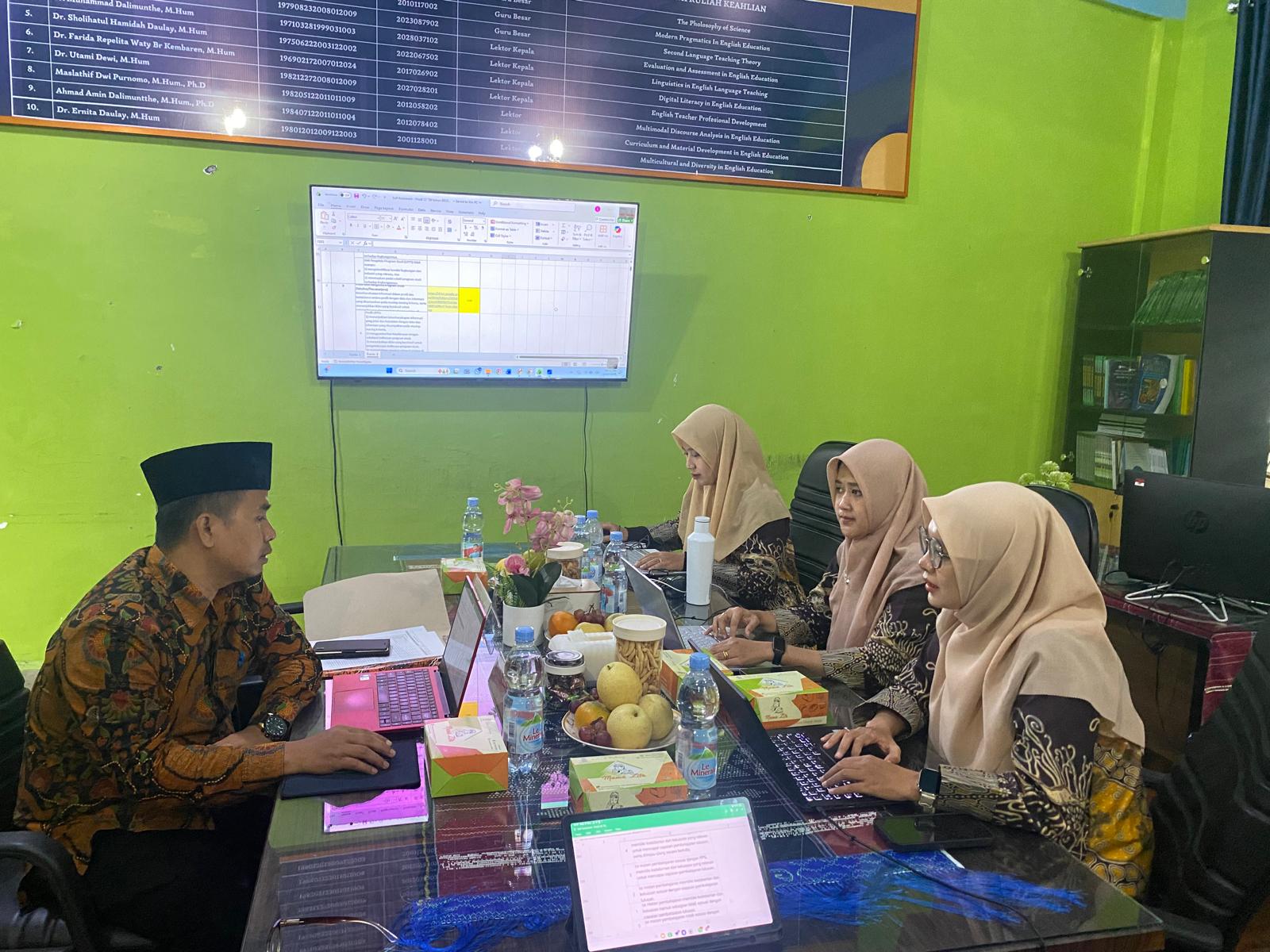
The audit process ran smoothly and involved open academic discussions between the auditors, program management, and supporting academic staff. Various documents related to curriculum implementation, learning outcomes, lecturer performance, student services, and quality assurance mechanisms were reviewed thoroughly.
Reflina, M.Pd., Secretary of the Master’s Program in English Education, also delivered her remarks, highlighting the importance of documentation and systematic quality management in supporting academic excellence.
“Quality assurance requires consistency and discipline, especially in documentation and academic records. Through this audit, we gain valuable insights to further strengthen our archiving system and ensure that all academic activities are well documented and measurable,” she explained.
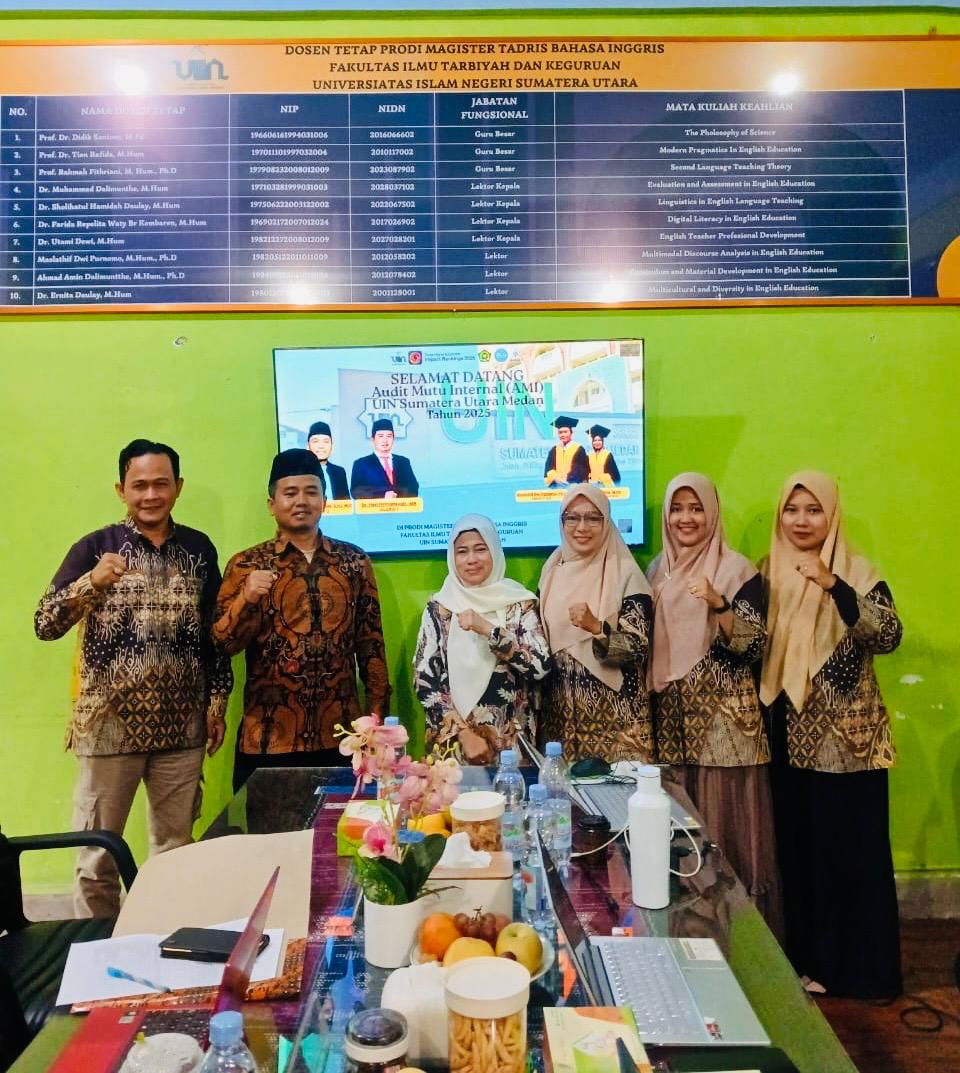
She added that the program remains open to feedback and continuously strives to improve administrative and academic management in line with institutional standards.
During the audit session, the auditors appreciated the overall quality maintained by the Master’s Program in English Education. They acknowledged the program’s strong commitment to academic development, innovation, and internationalization, which has been reflected in various academic activities, including international student mobility, conferences, community services, and academic forums.
Although the auditors provided several constructive suggestions, particularly related to strengthening archival systems and improving documentation of academic and supporting activities, they emphasized that these recommendations were part of a healthy quality improvement process. Overall, the auditors concluded that the program has demonstrated a strong culture of quality assurance and continuous improvement.
The Internal Quality Audit is an integral component of the PPEPP cycle (Determination, Implementation, Evaluation, Control, and Improvement), which forms the backbone of internal quality assurance in Indonesian higher education. Through PPEPP, academic units are encouraged to set clear standards, implement them consistently, evaluate outcomes, control deviations, and continuously improve academic quality.
In line with this framework, the Internal Quality Audit serves as a strategic evaluation stage to ensure that academic standards are not only met but also continuously enhanced. The collaborative involvement of program leadership, lecturers, and the Quality Assurance Unit reflects a shared commitment to building a quality-driven academic culture at UIN Sumatera Utara.
The successful implementation of the AMI at the Master’s Program in English Education further reinforces FITK’s dedication to transparent governance, accountable academic management, and sustainable quality development. It also strengthens the program’s readiness to face future challenges in higher education, particularly in the context of global competition and international academic standards.
At the conclusion of the audit, Dr. Maslathif reaffirmed the program’s commitment to following up on the auditors’ recommendations.
“We are grateful for the valuable feedback provided by the auditors. It will serve as a strong foundation for further improvement and innovation as we continue to strengthen the quality and reputation of our program,” he concluded.
The Internal Quality Audit on December 17, 2025, marked another important step for the Master’s Program in English Education, FITK, UIN Sumatera Utara, in maintaining academic excellence and fostering a culture of continuous quality improvement.