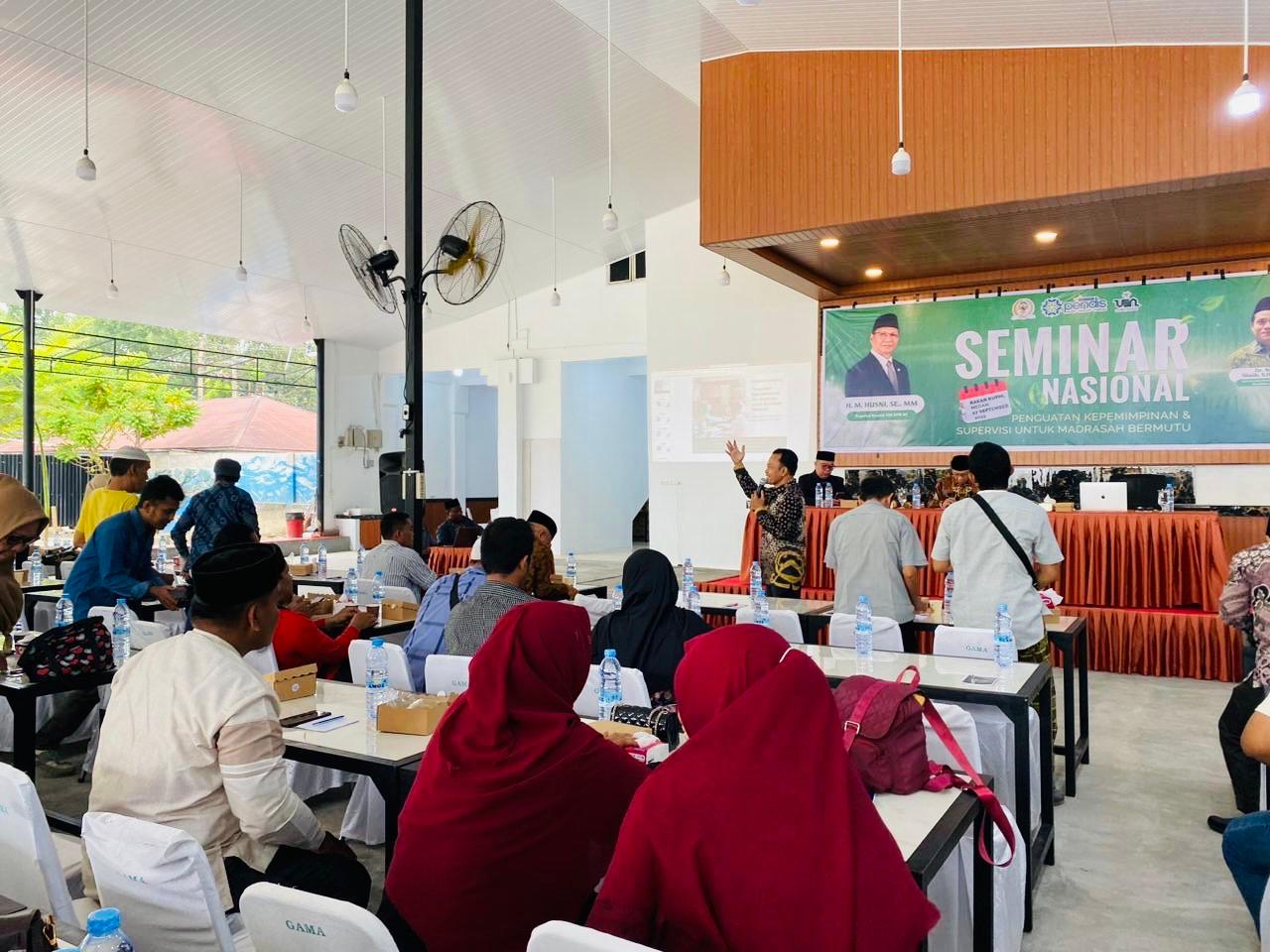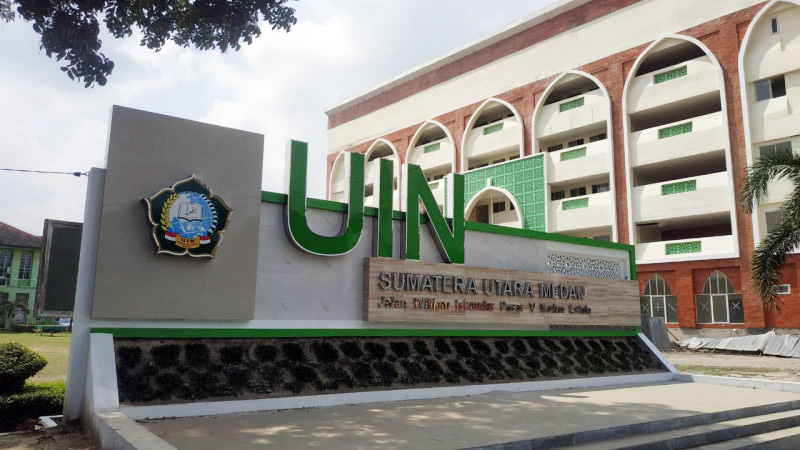
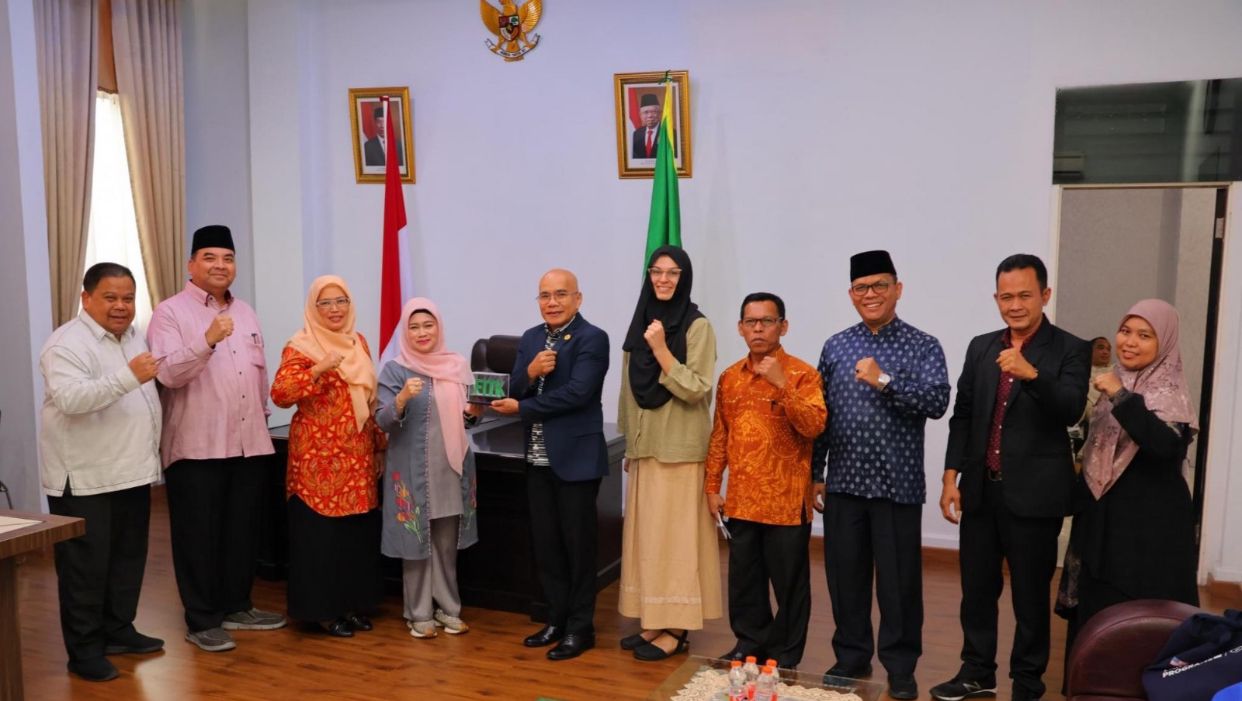
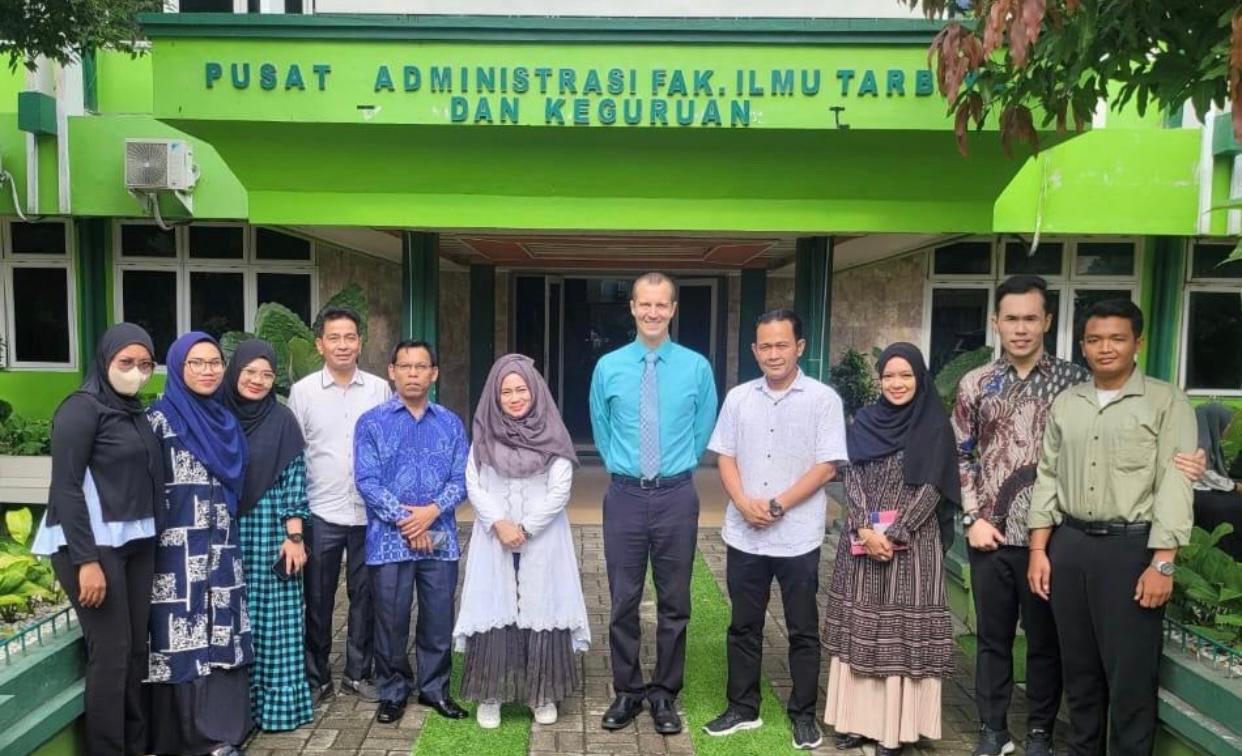

Medan, September 27, 2025 – The Faculty of Tarbiyah and Teacher Training (FITK) at Universitas Islam Negeri Sumatera Utara (UIN SU), in collaboration with the Directorate of KSKK Madrasah under the Directorate General of Islamic Education, Ministry of Religious Affairs of the Republic of Indonesia, successfully organized a National Seminar entitled Strengthening Leadership and Supervision for Quality Madrasah. The event was held on Saturday, September 27, 2025, at Rakan Kuphi, Ringroad, Medan.
The seminar was part of the Program for Improving the Quality of Islamic Education through Swakelola Type II for 2025, aiming to enhance the competence and professionalism of madrasah leaders across Medan and Deli Serdang. This prestigious forum was attended by heads of madrasahs from across the region, serving as a significant step toward ensuring quality and excellence in Islamic education.
The seminar featured two distinguished speakers:
- Maslathif Dwi Purnomo, M.Hum., Ph.D., Head of the Master’s Program in English Education, FITK – UIN Sumatera Utara.
- H. M. Husni, SE., MM, Member of the House of Representatives (DPR RI), Commission VIII.
Both speakers shared profound insights into the roles of leadership and supervision in driving transformation in Islamic educational institutions.
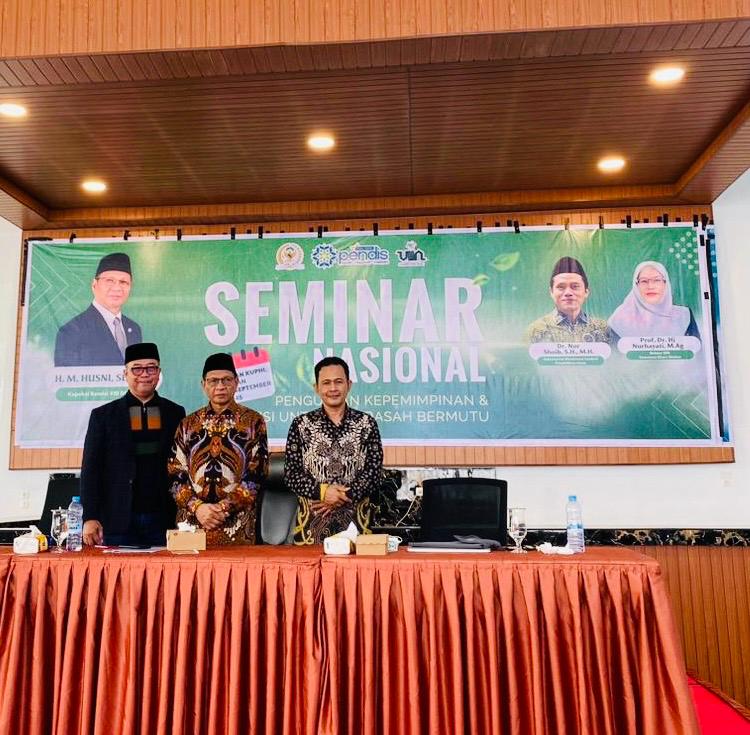
In his keynote presentation, Maslathif Dwi Purnomo, Ph.D. emphasized the importance of strengthening the leadership capacity of madrasah heads to meet the challenges of the modern educational landscape. He highlighted the direct correlation between effective leadership, quality supervision, and the overall performance of madrasah.
“Leadership in education is not merely about administration; it is about vision, innovation, and the ability to inspire others,” Maslathif noted. “Madrasah leaders must be able to navigate change, foster collaboration, and uphold values that align with both national education standards and the spiritual mission of Islamic education.”
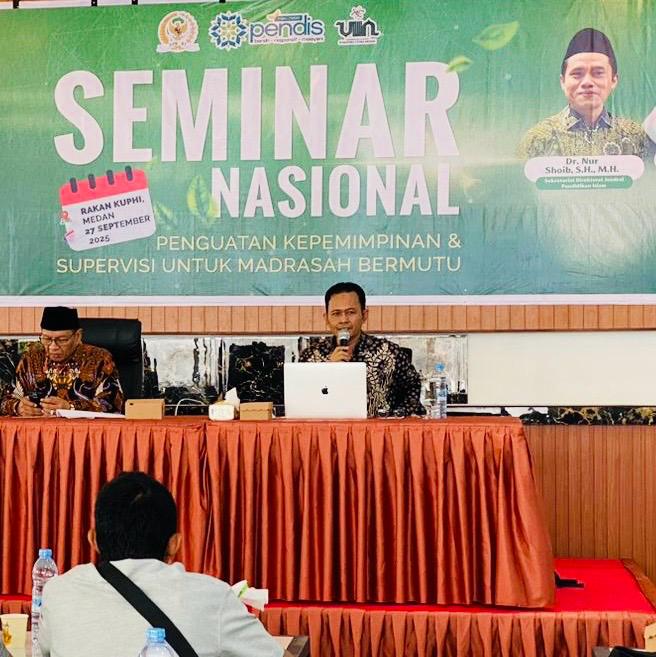
He further underlined the importance of supervision as a tool not for control, but for continuous improvement.
“Supervision should be seen as a developmental process, where feedback, mentoring, and capacity building create an environment for teachers to thrive. Quality supervision ensures that teaching and learning are dynamic, relevant, and impactful for students’ growth.”
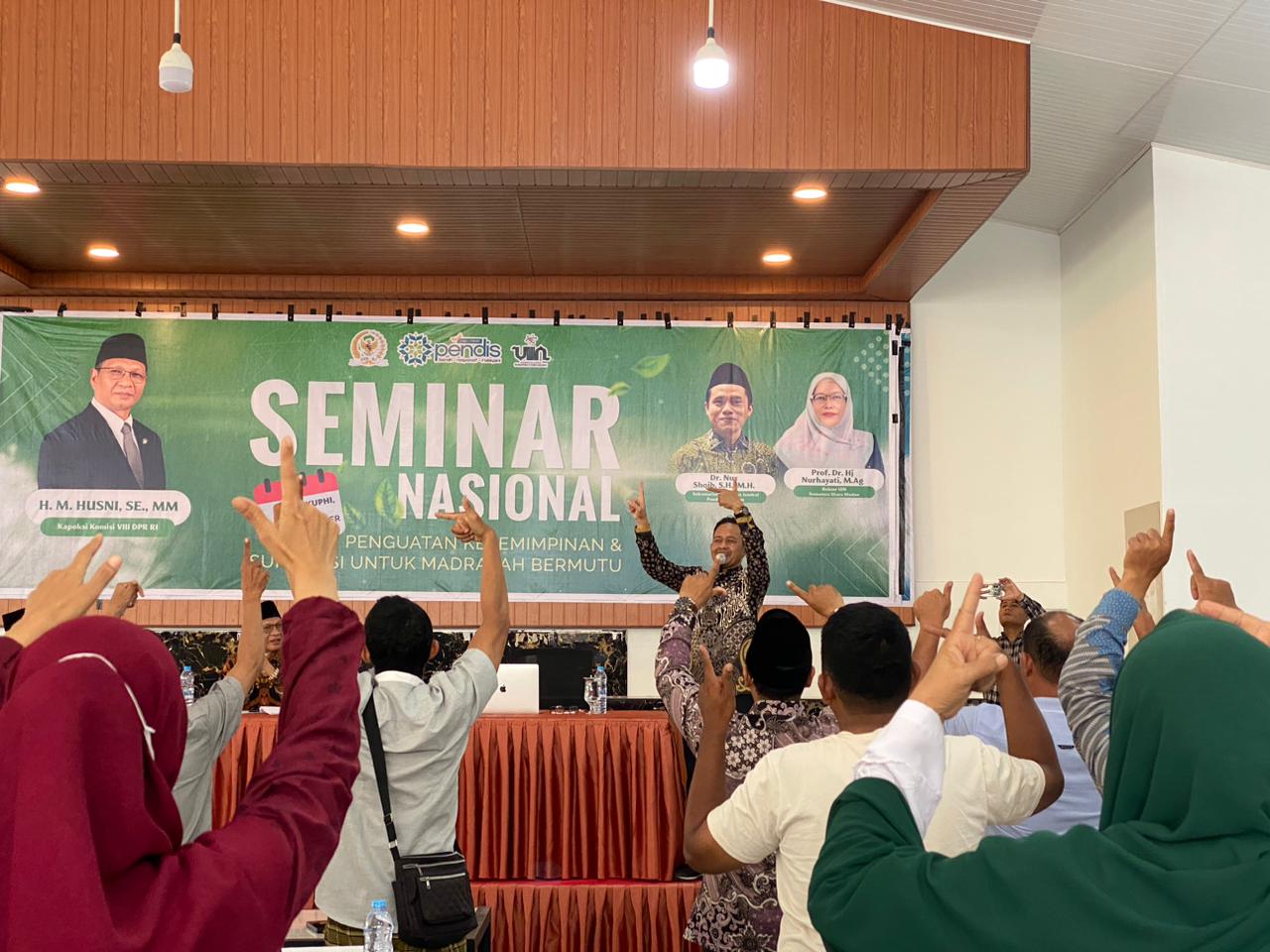
According to Maslathif, the advancement of madrasahs lies in leaders who can balance managerial competence with moral integrity. He encouraged participants to cultivate leadership that embodies servant leadership principles while also being adaptive to innovation and technological change.
“We are at a point where Islamic education must adapt to the digital era, without losing its soul. Leadership grounded in integrity, supported by effective supervision, will ensure our madrasahs remain strong pillars of character education.”
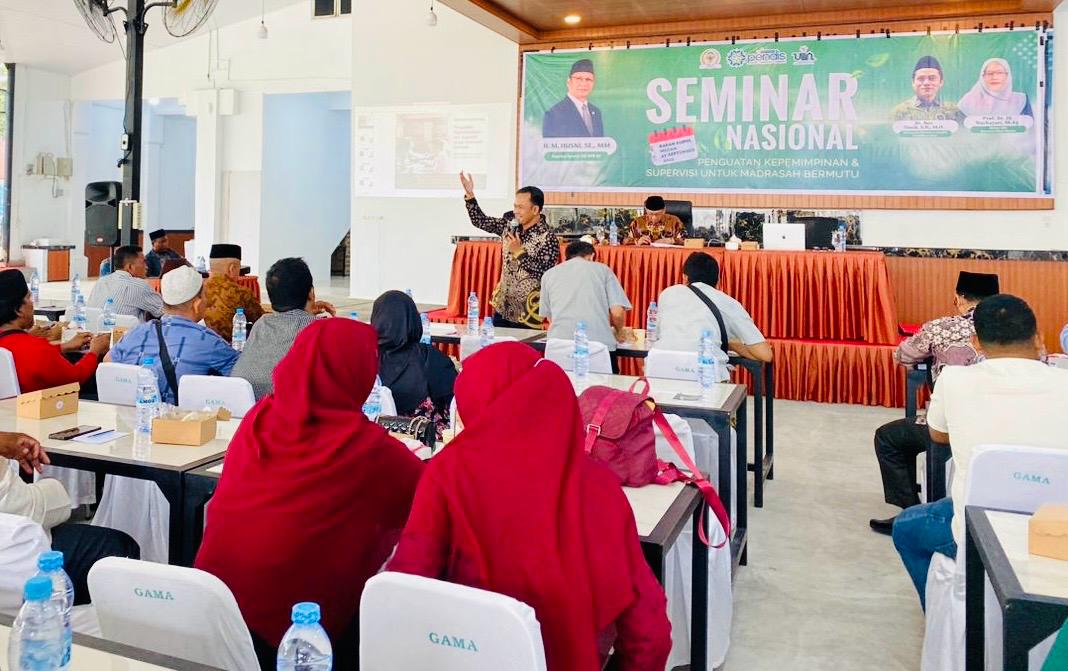
Complementing Maslathif’s address, H. M. Husni stressed the role of policymakers and the government in supporting the growth of madrasahs. He reaffirmed the government’s commitment through Commission VIII of the DPR RI to ensuring resources, programs, and regulations are aligned with the goal of producing quality graduates who contribute positively to society.
“Education is the backbone of the nation’s progress. Madrasahs are not only institutions of learning but also centers of moral and spiritual development. By strengthening leadership and supervision, we are investing in the future of our children and our nation,” he remarked.
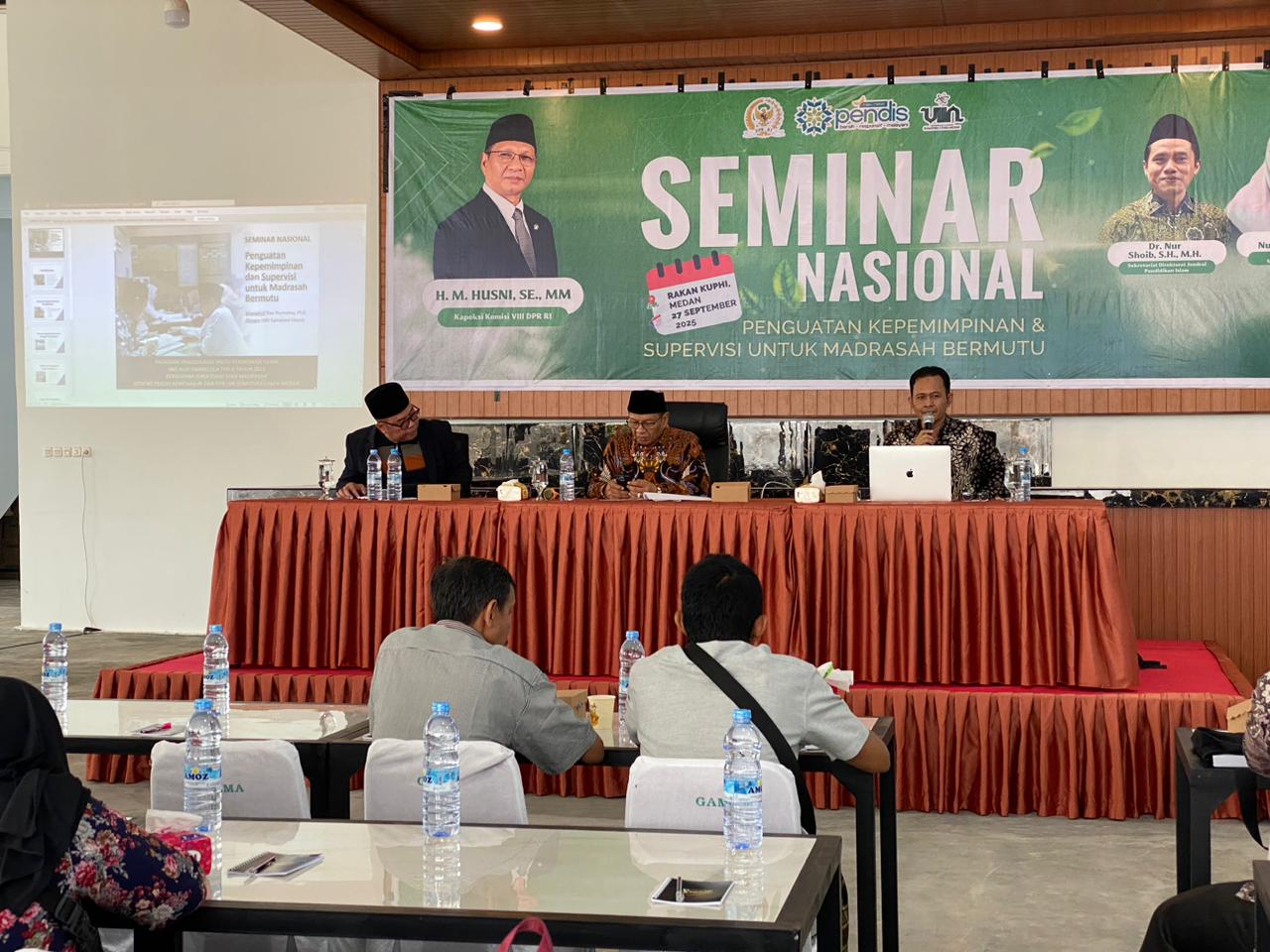
The seminar also served as a platform for madrasah heads to exchange ideas, challenges, and best practices in leadership and supervision. Many participants expressed their appreciation for the practical strategies offered during the seminar, which they believed could be directly applied to their respective institutions.
Workshops and interactive sessions complemented the keynote addresses, ensuring participants engaged in meaningful discussions on pressing issues, including digital integration, accountability, and the cultivation of character-based education.
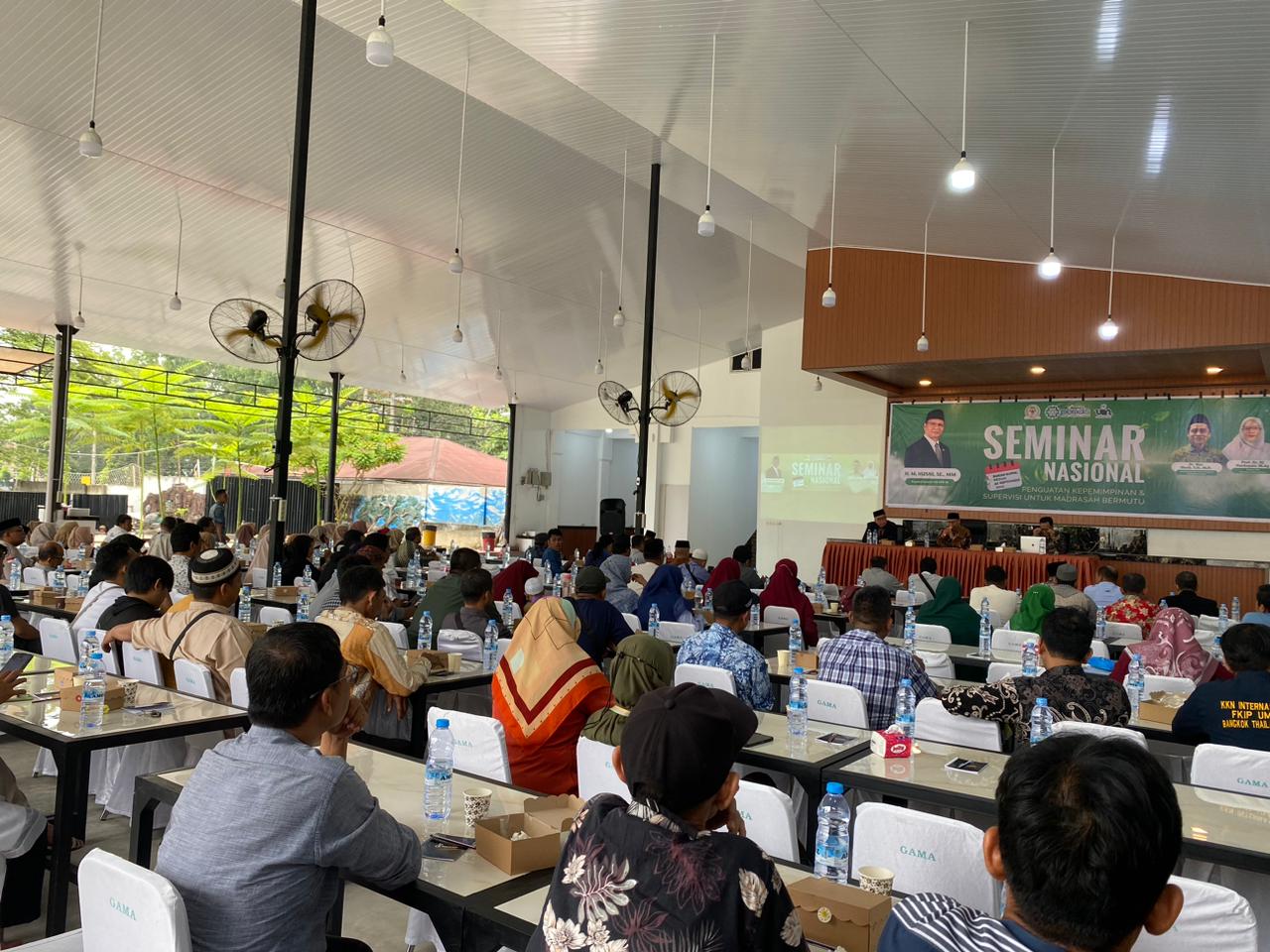
The Program for Improving the Quality of Islamic Education through Swakelola Type II reflects the government’s serious commitment to advancing education quality through sustainable, localized initiatives. By focusing on leadership and supervision, the program acknowledges the central role of school leaders in shaping institutional culture and educational outcomes.
“The future of our madrasahs depends on leaders who are ready to serve with integrity, supervise with compassion, and innovate with courage. Together, we must ensure that Islamic education continues to be relevant, resilient, and responsive to the needs of our times.”
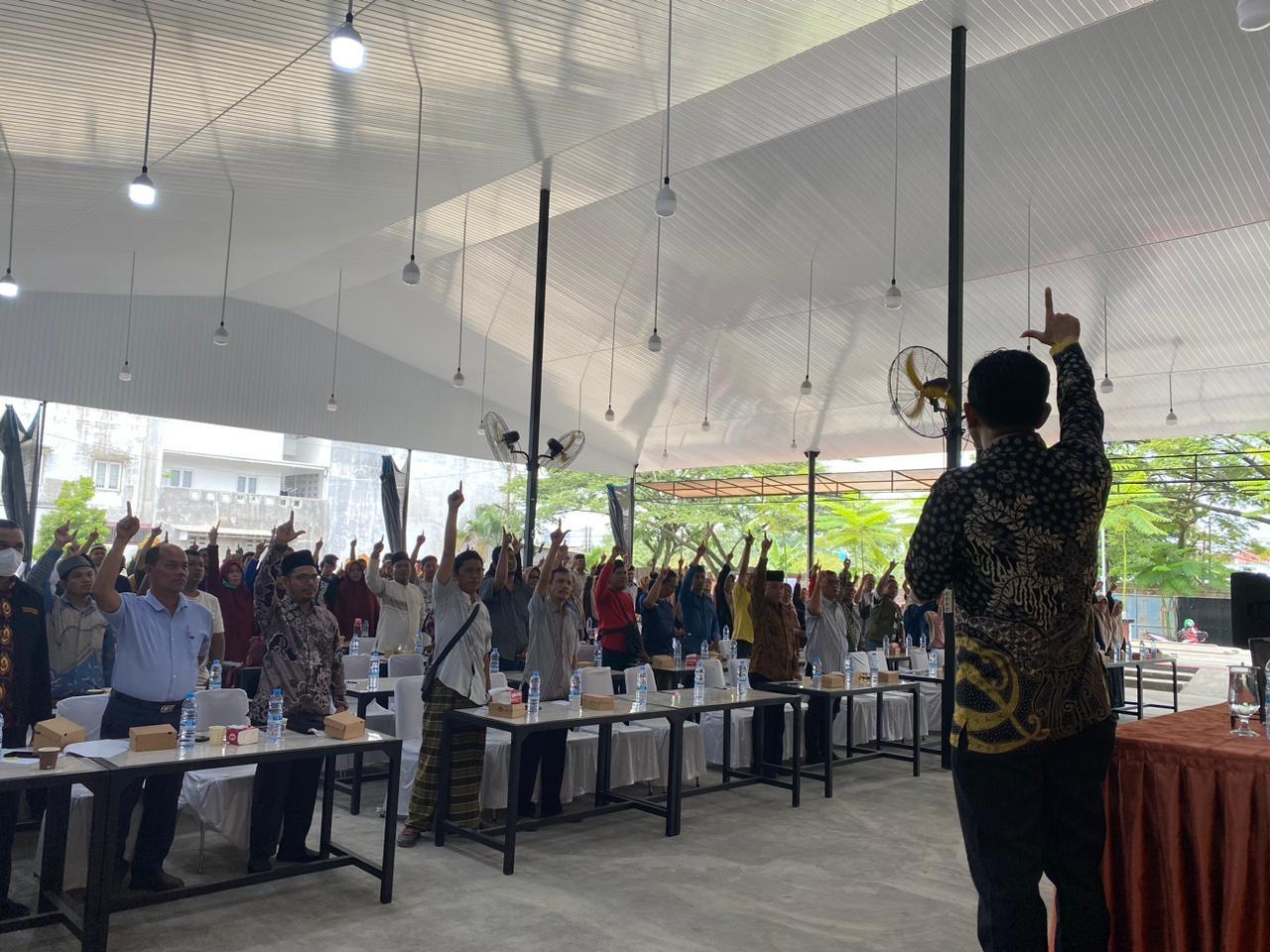
The seminar’s success underscored the significance of collaboration between government agencies, universities, and educational institutions. With active participation from madrasah leaders, the event set a constructive precedent for ongoing programs aimed at empowering educators in Medan, Deli Serdang, and beyond.
As the seminar concluded, participants left with renewed inspiration and practical insights, ready to strengthen leadership and supervision within their institutions. The event also highlighted FITK UIN Sumatera Utara’s commitment to serving as a hub of academic excellence and professional development in Islamic education. In the broader scope, such initiatives reaffirm the role of madrasahs as vital contributors to Indonesia’s educational and moral landscape, ensuring that the next generation grows with both knowledge and character.