
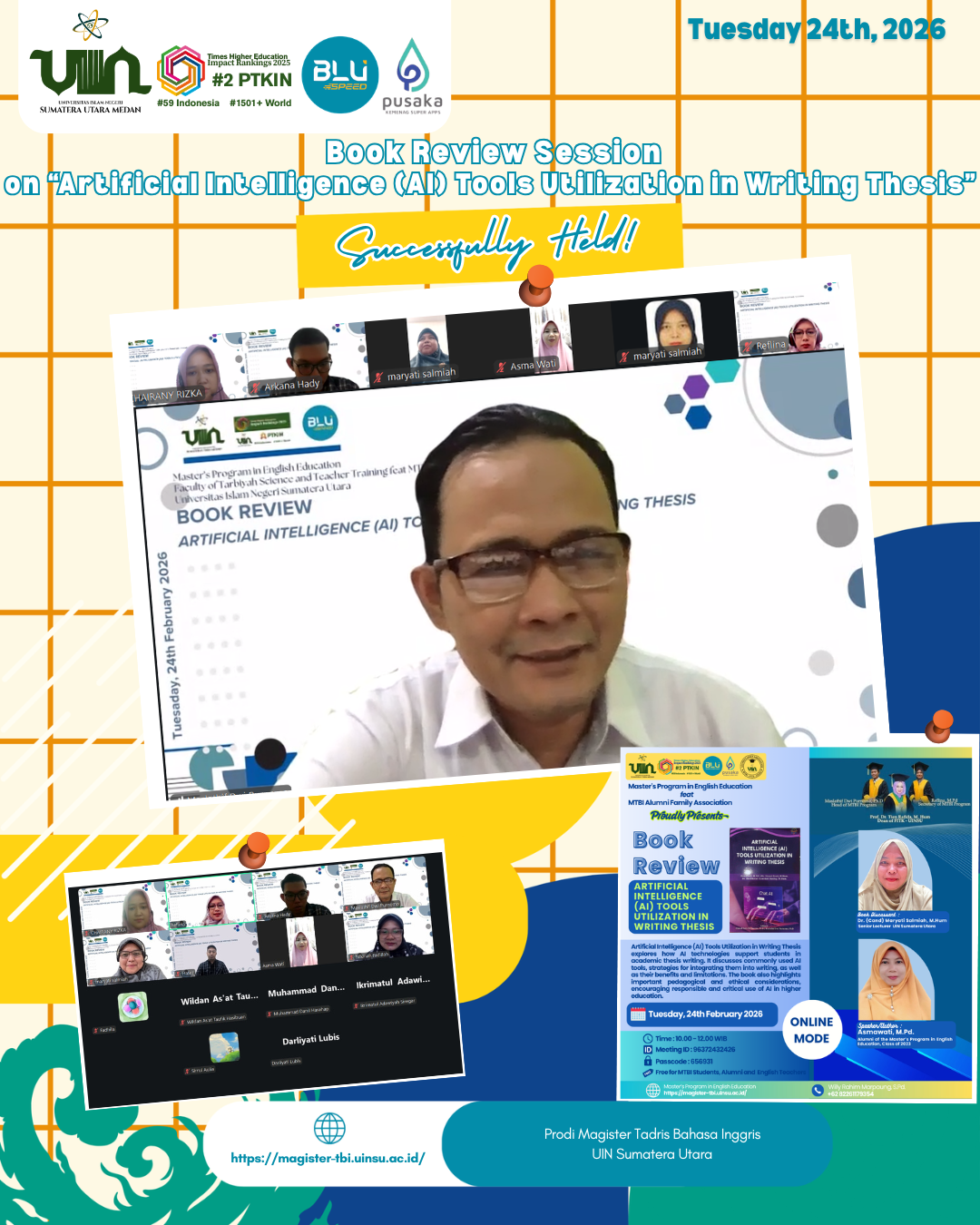
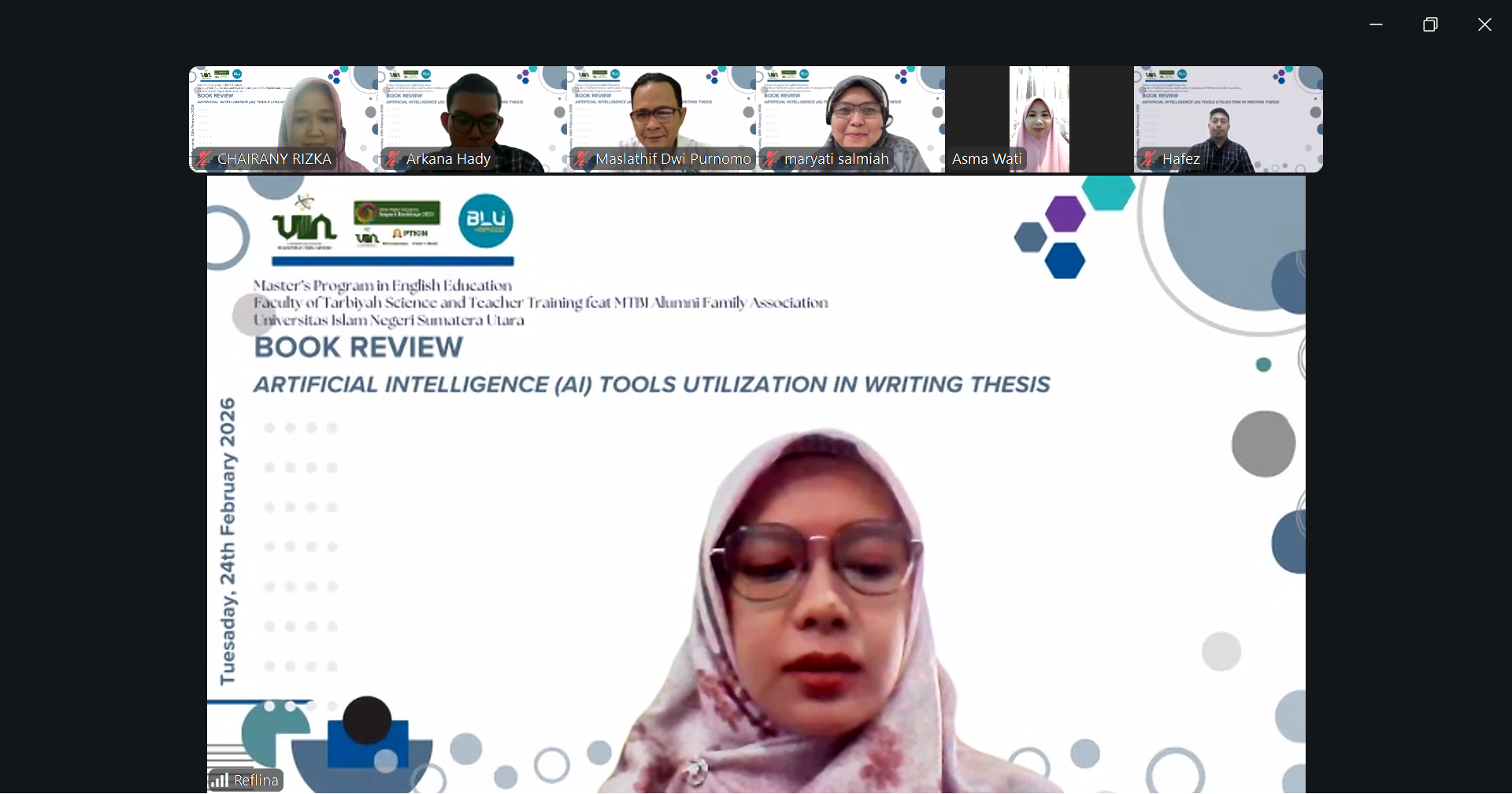
The Master’s Program in English Education (MTBI), Faculty of Tarbiyah and Teacher Training, Universitas Islam Negeri Sumatera Utara, in collaboration with the MTBI Alumni Family Association, successfully organized an online Book Review event on Tuesday, 24 February 2026. The event featured the book Artificial Intelligence (AI) Tools Utilization in Writing Thesis and was conducted via a virtual meeting platform from 10.00 to 12.00 WIB. The program was attended by MTBI students, alumni, and English teachers, reflecting the growing academic interest in the responsible integration of artificial intelligence in higher education.
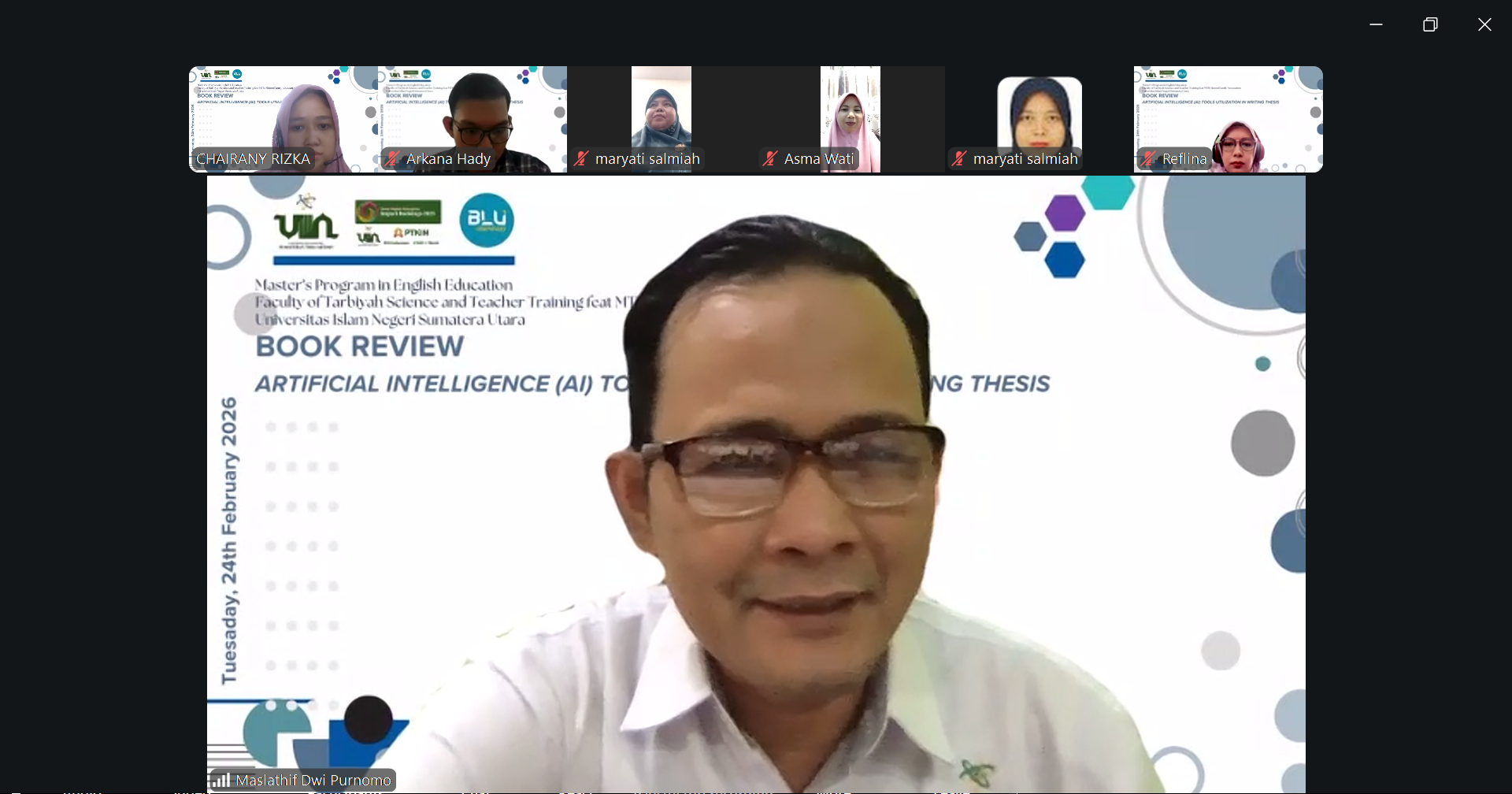
The event commenced with welcoming remarks from the Head of the MTBI Program, Maslathif Dwi Purnomo, Ph.D., who emphasized the importance of critical engagement with emerging technologies in academia. In his address, he stated,
“Artificial Intelligence is not a replacement for scholarly thinking; rather, it is a complementary instrument that must be guided by critical reasoning, ethical awareness, and academic integrity. Artificial Intelligence should not be perceived as a threat to academic integrity, nor as a shortcut that diminishes scholarly effort. Instead, it must be positioned as a complementary instrument that supports critical inquiry, academic rigor, and research productivity. However, its utilization requires strong ethical awareness, institutional guidance, and a firm commitment to originality. Universities must lead the discourse by equipping students not only with technical competence, but also with moral and intellectual responsibility in using AI tools.”
He further underlined that universities must take a proactive role in preparing students to navigate technological advancements responsibly.
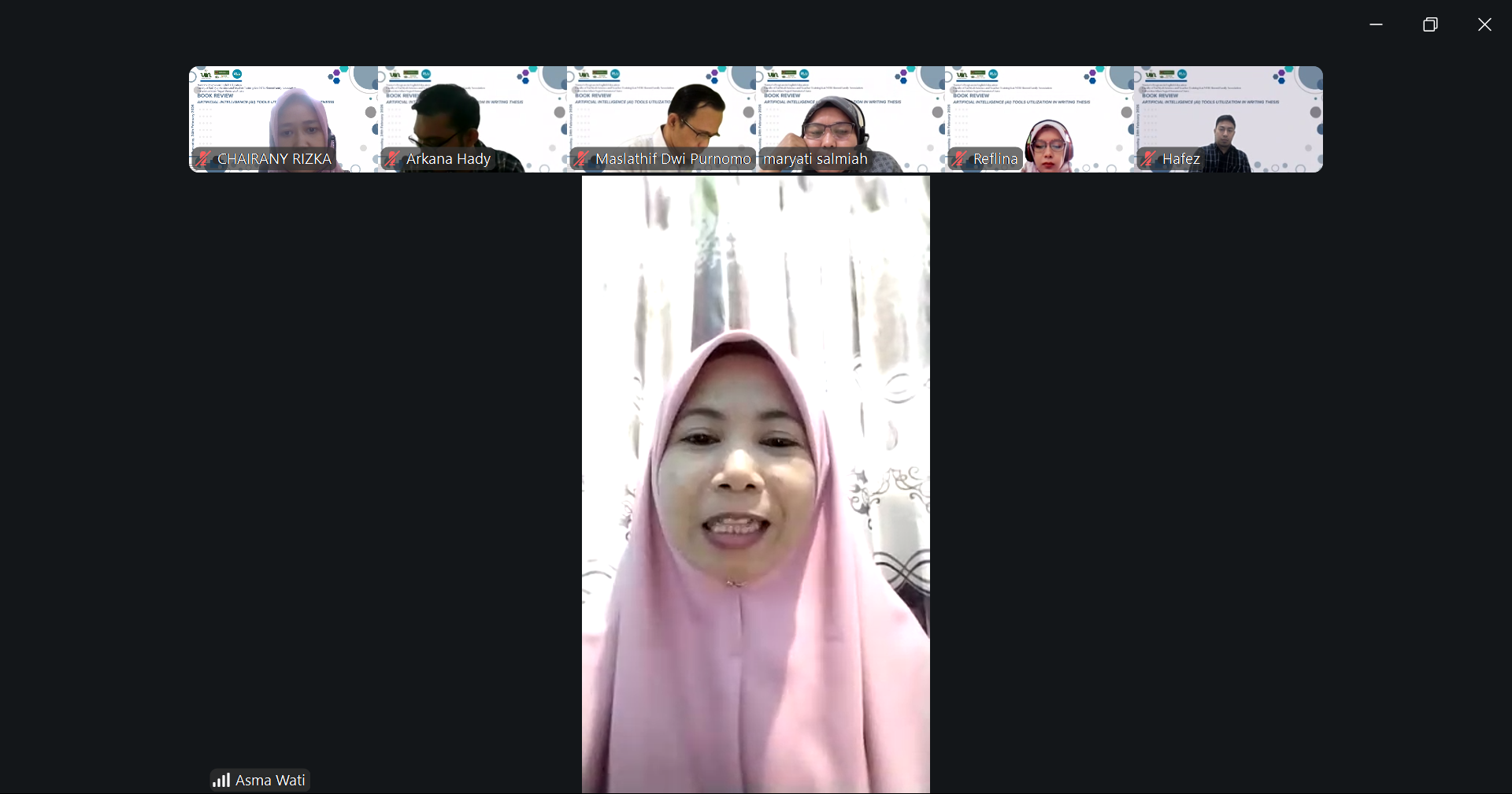
The main presentation was delivered by the book’s author, Asmawati, M.Pd., an alumna of the Master’s Program in English Education (Class of 2023). She elaborated on practical strategies for utilizing AI tools in various stages of thesis writing, including brainstorming, drafting, editing, and language enhancement. She asserted,
“AI tools can assist students in structuring and refining their academic work; however, intellectual ownership, argumentation, and originality must remain entirely in the hands of the researcher.”
She also highlighted the necessity of transparency and ethical acknowledgment when using AI support in academic writing.
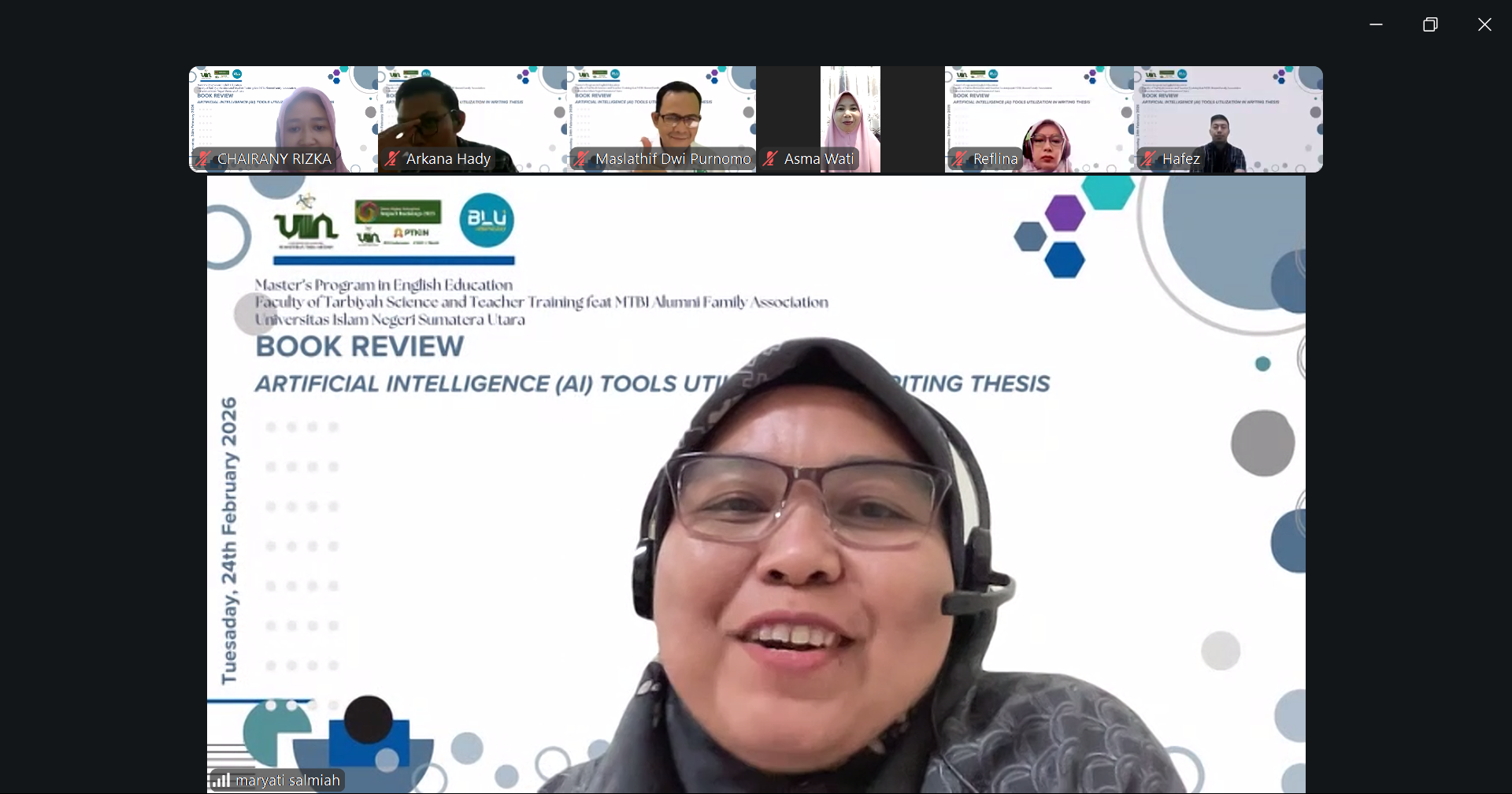
The discussion session was enriched by a comprehensive review from Dr. (Cand) Maryati Salmiah, M.Hum., Senior Lecturer at UIN Sumatera Utara, who served as the book discussant. She critically examined the pedagogical implications of AI integration in thesis supervision. In her reflection, she remarked
“The presence of AI in academic writing challenges us as educators to redesign our supervision models, strengthen research literacy, and cultivate students’ critical digital competence. The emergence of AI in academic writing compels us, as educators and supervisors, to rethink our pedagogical approaches. Rather than prohibiting technology, we need to redesign supervision models that prioritize critical engagement, research literacy, and reflective practice. Students must be trained to question AI-generated outputs, verify sources, and maintain analytical depth. At the institutional level, clear policies and ethical frameworks are indispensable to ensure that AI becomes a means of empowerment rather than dependency.”
She encouraged the academic community to develop clear institutional policies to ensure the ethical and effective use of AI technologies.
The interactive dialogue between speakers and participants demonstrated high academic enthusiasm and intellectual engagement.
The event concluded with a formal closing statement delivered by the Secretary of the MTBI Program, Reflina, M.Pd., who expressed appreciation to the speakers, participants, and organizing committee for their meaningful contributions. In her closing remarks, she stated, “This academic forum reflects our collective commitment to advancing scholarly excellence in the digital era. We hope that today’s discussion will inspire continuous dialogue, critical reflection, and responsible innovation in the use of Artificial Intelligence within academic research and writing.”
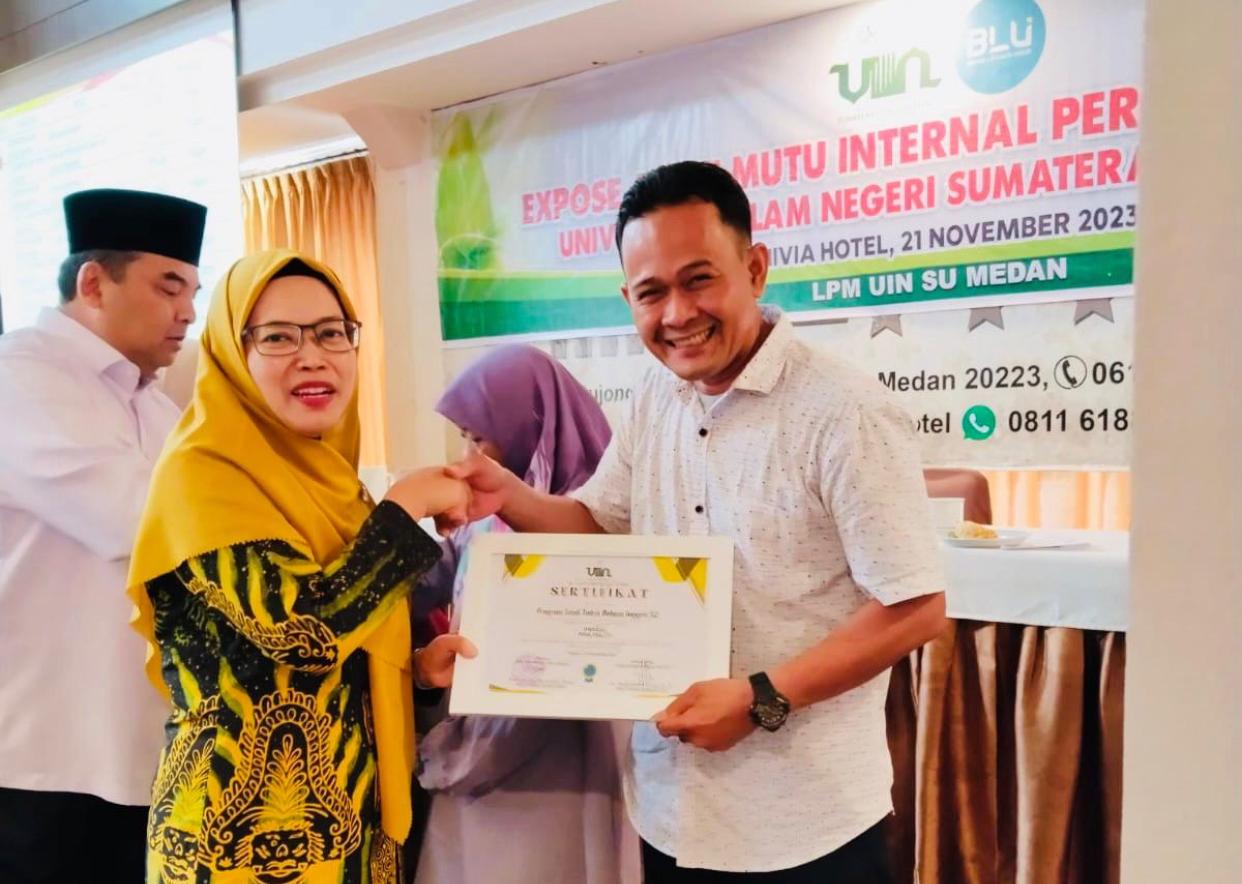
The session was formally concluded with the symbolic presentation of certificates of appreciation to the speakers and discussant by Reflina, M.Pd., as a token of gratitude for their valuable insights and scholarly contributions. The successful implementation of this Book Review event reflects MTBI’s strong commitment to fostering academic innovation, strengthening alumni collaboration, and promoting ethical scholarship. It is expected that this scholarly forum will stimulate further research initiatives, policy discussions, and responsible practices concerning the utilization of Artificial Intelligence in academic writing across higher education institutions.
The successful implementation of this Book Review event reflects MTBI’s strong commitment to fostering innovation, strengthening alumni engagement, and promoting ethical academic practices. It is expected that this scholarly forum will inspire further research, collaboration, and policy development concerning the utilization of Artificial Intelligence in academic writing within higher education institutions.