

Medan, Indonesia – October 7, 2025 — The Master’s Program in English Education (MTBI), Faculty of Tarbiyah Science and Teacher Training (FITK), Universitas Islam Negeri Sumatera Utara (UINSU) continues its commitment to improving the academic competencies of postgraduate students through the Graduate Academic Forum, a regular scholarly platform designed to nurture research skills, critical thinking, and academic publication readiness. As part of this initiative, MTBI UINSU held a special session guest lecture entitled “Strengthening Academic Writing for Publication: Key Strategies to Success Publish in SINTA 2 Journals” on Tuesday, October 7, 2025, from 12:30 to 14:00 WIB via Zoom.
The guest lecture featured Sukron Ma’mun., Ph.D., a senior lecturer at UIN Salatiga, who is widely recognized for his expertise in academic writing and publication strategies. The event was open to all MTBI students, with special emphasis on the Class of 2025, for whom attendance was mandatory as part of their academic enrichment program.
The session began with a warm greeting and introduction to the event delivered by Reflina, M.Pd., Secretary of the Master’s Program in English Education, who expressed her appreciation for the participants’ enthusiasm. She highlighted that academic writing is not merely a course requirement but a crucial scholarly skill that determines the visibility and impact of one’s research. She also emphasized the importance of learning directly from experienced scholars to understand the evolving landscape of academic publishing in Indonesia and beyond.
Following the opening remarks, Maslathif Dwi Purnomo, M.Hum., Ph.D., Head of the Master’s Program in English Education, officially opened the session with an inspiring speech. In his address, he underlined the relevance of academic writing as one of the core competencies expected of MTBI graduates. He explained that one of the three graduate profiles targeted by the program is to develop character-driven ELT researchers who are able to contribute to the global body of knowledge.
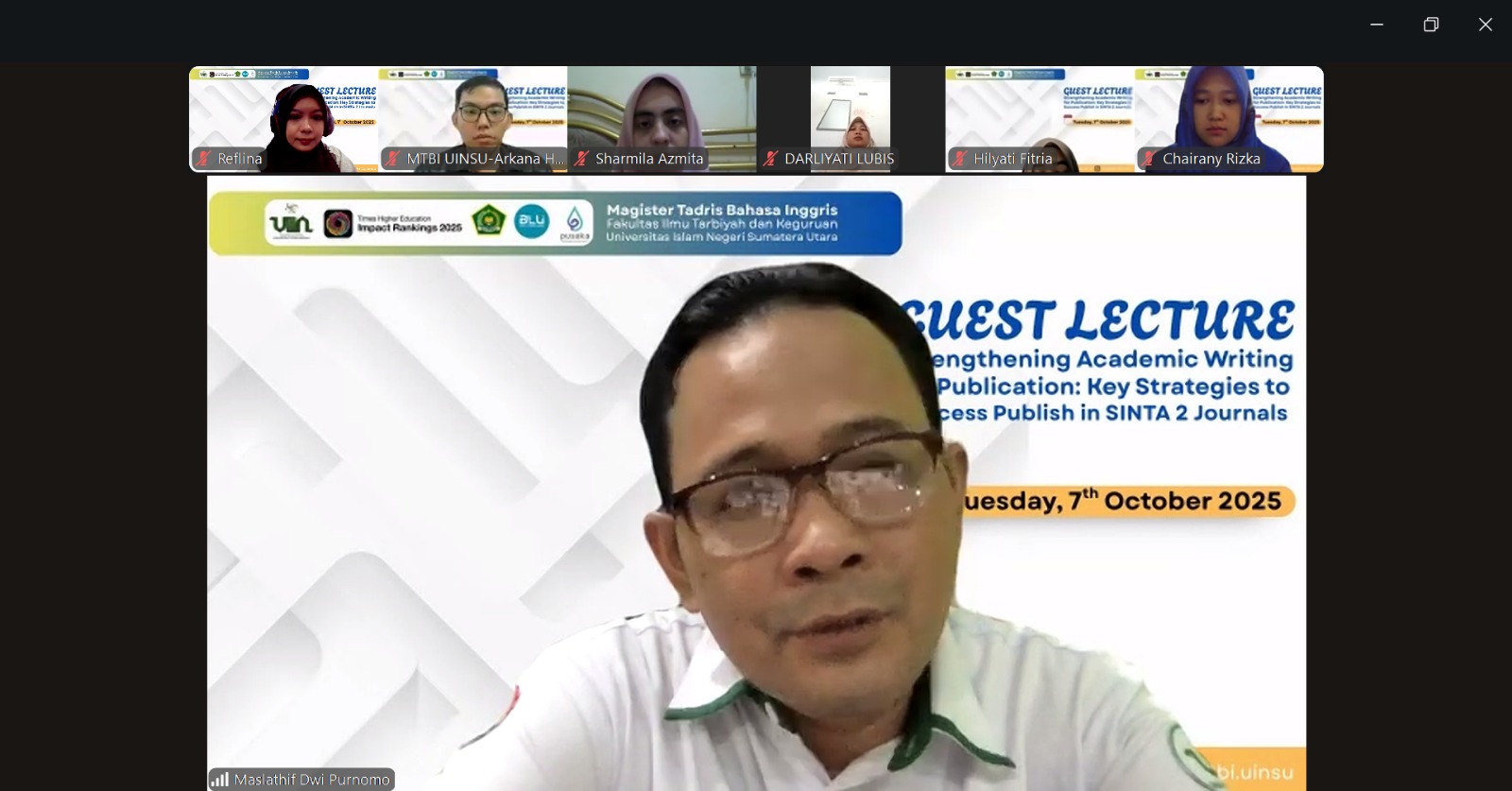
“Our mission is not only to produce professional English educators but also to nurture researchers and innovators who are globally competitive. Mastering academic writing and publishing in reputable journals such as SINTA 2 is a vital part of this journey,” Maslathif., Ph.D. stated.
He further emphasized that MTBI’s academic activities are designed to bridge theory and practice through transdisciplinary approaches, encouraging students to engage actively in research, publication, and community service. This guest lecture, he noted, is part of the program’s flagship initiatives aimed at preparing students for international academic collaboration and scholarly excellence.
The session then continued under the guidance of Chairany Rizka, M.Pd., who served as moderator. She introduced the distinguished speaker, Sukron Ma’mun., Ph.D., and outlined his extensive contributions in the field of English language education and academic writing. Chairany also ensured the session ran smoothly, facilitating both the presentation and the interactive Q&A segment where students eagerly posed questions about their research and publication challenges.
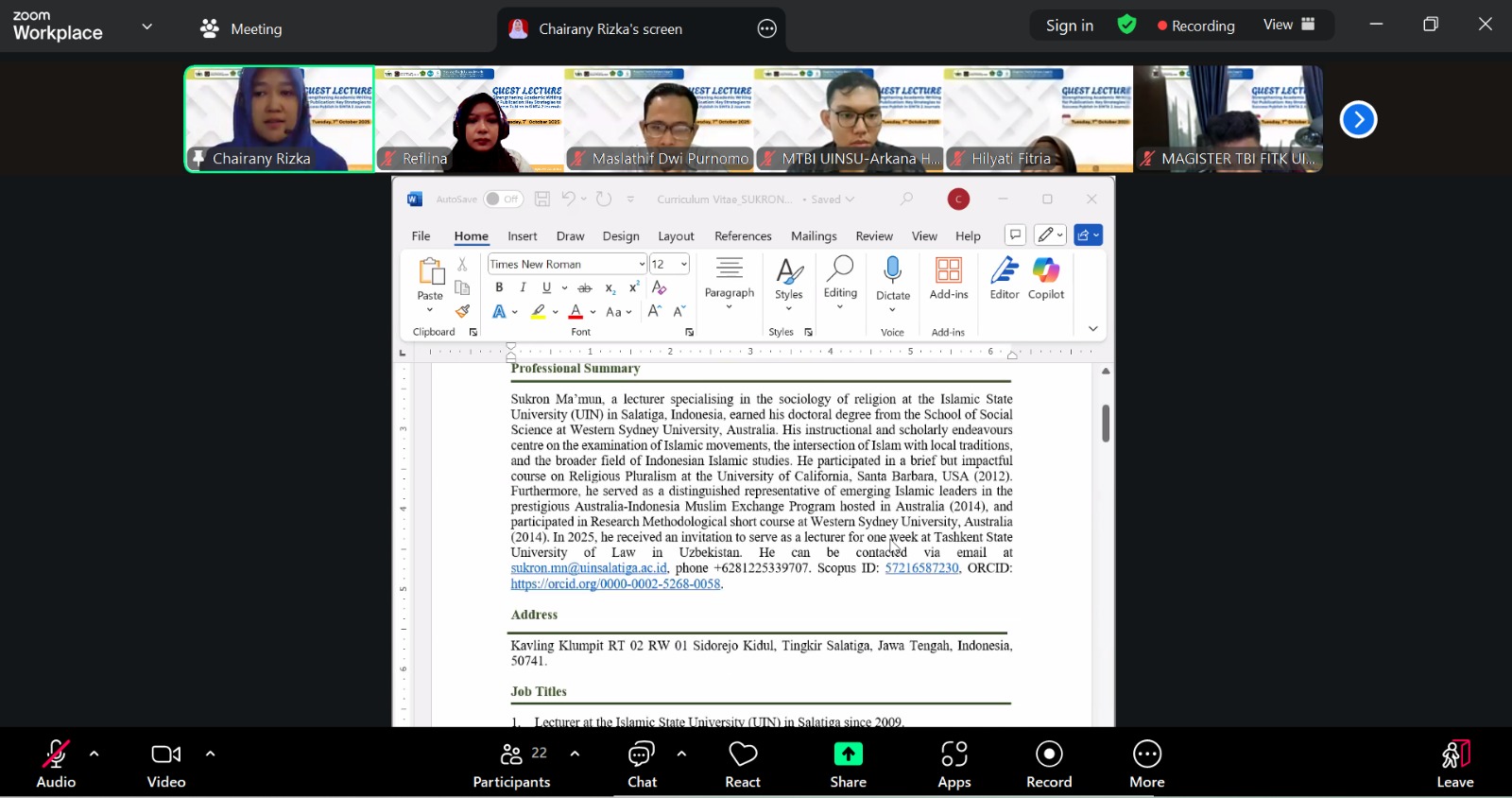
In his presentation, Sukron Ma’mun, Ph.D. provided valuable insights into the process of writing academic articles that meet the standards of SINTA 2 journals. He began by stressing the importance of a well-crafted introduction section, explaining that it sets the tone and direction of the entire article. He highlighted four essential components of a strong introduction:
- Justifying why the research question is significant and worth answering.
- Explaining how previous scholars have addressed—or failed to address—the issue.
- Demonstrating how the research offers a new contribution to the field.
- Clearly stating the research questions or objectives at the end of the introduction.
“Your introduction should flow logically, coherently, and systematically from the beginning to the last part. A strong introduction is not just about stating what you want to study, but why it matters and how it adds to existing scholarship,” Sukron, Ph.D. explained.
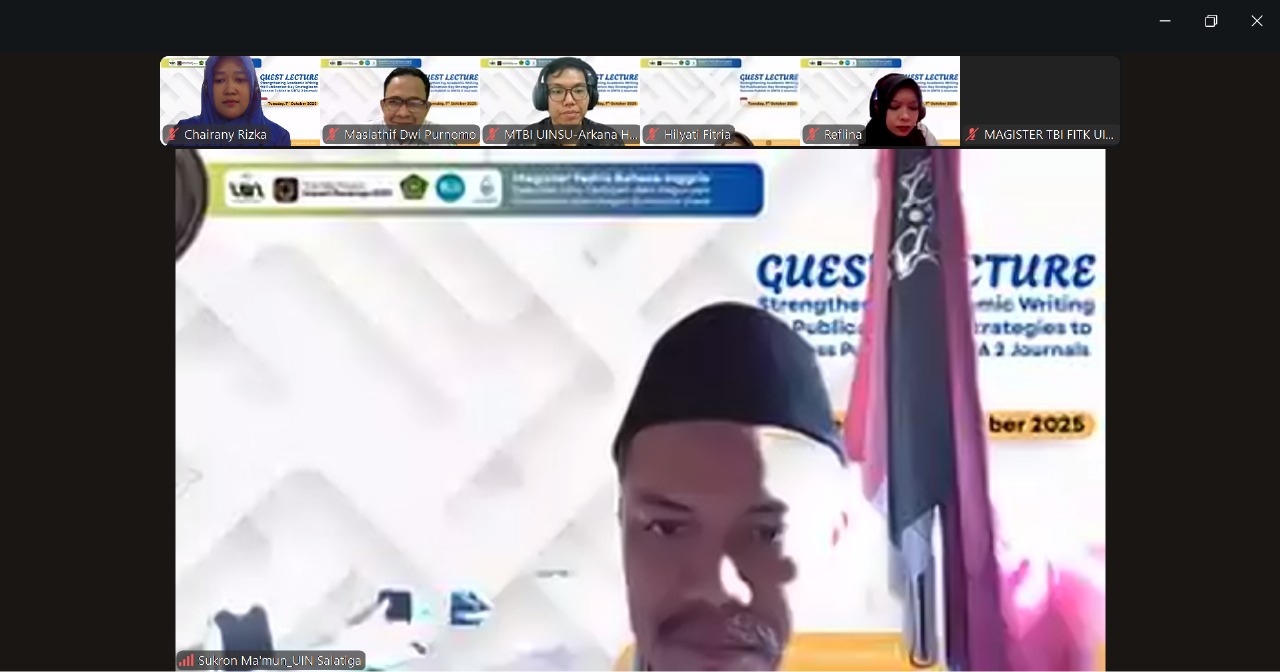
He also shared practical strategies for improving manuscript quality, such as aligning research questions with journal scopes, selecting relevant literature, and presenting arguments with clarity and academic rigor. Sukron, Ph.D. encouraged students to view writing as an iterative process that involves continuous revision and feedback.
Another important point raised in the lecture was the significance of academic contribution and originality. Sukron explained that journal editors often look for manuscripts that not only report data but also offer new perspectives or theoretical advancements. He advised students to position their research within ongoing scholarly debates and clearly articulate how their findings advance the field.
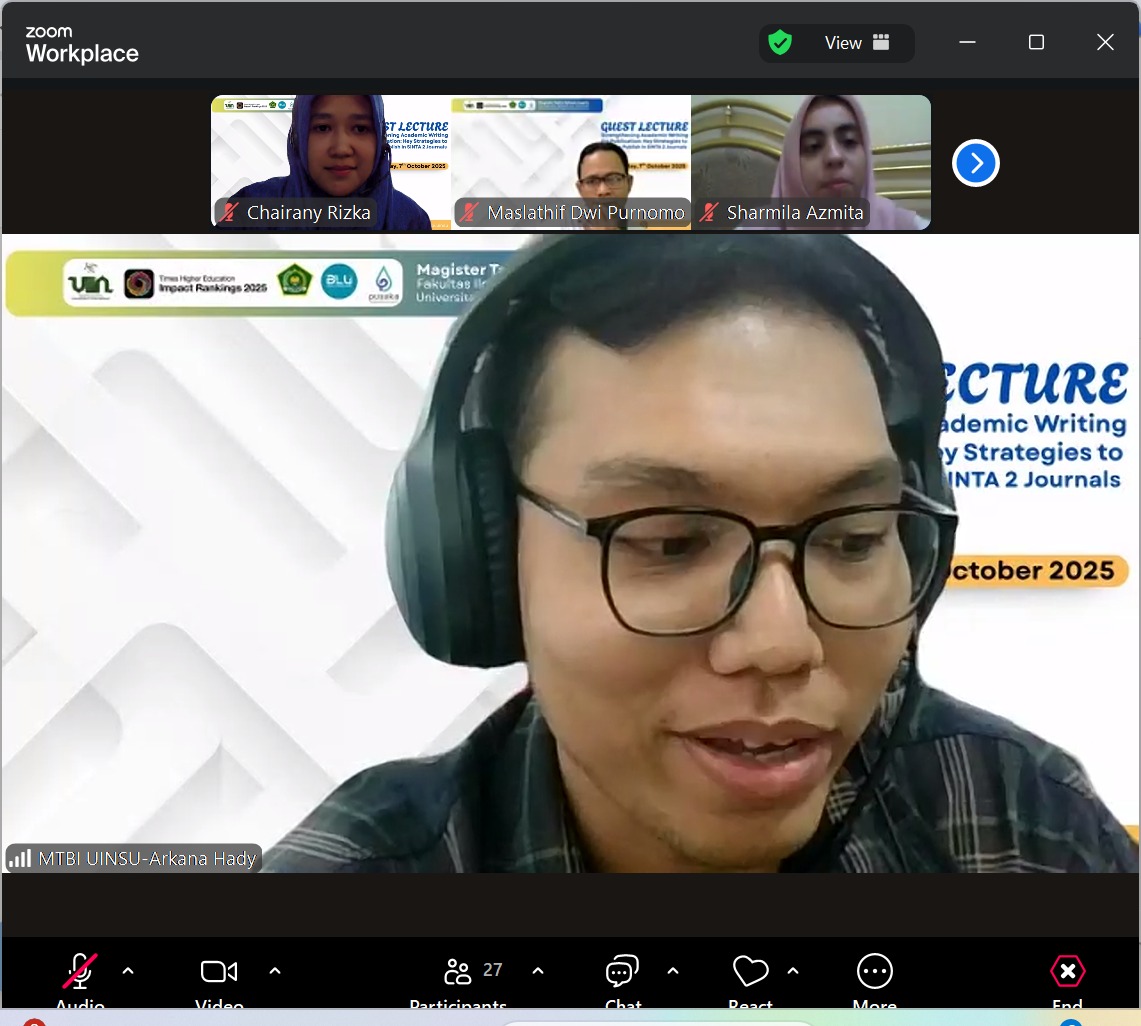
The interactive segment of the event allowed students to seek guidance on common publication obstacles such as rejection handling, journal selection, and responding to reviewers’ comments. Sukron, Ph.D. answered each question thoroughly, providing actionable tips based on his extensive publishing experience.
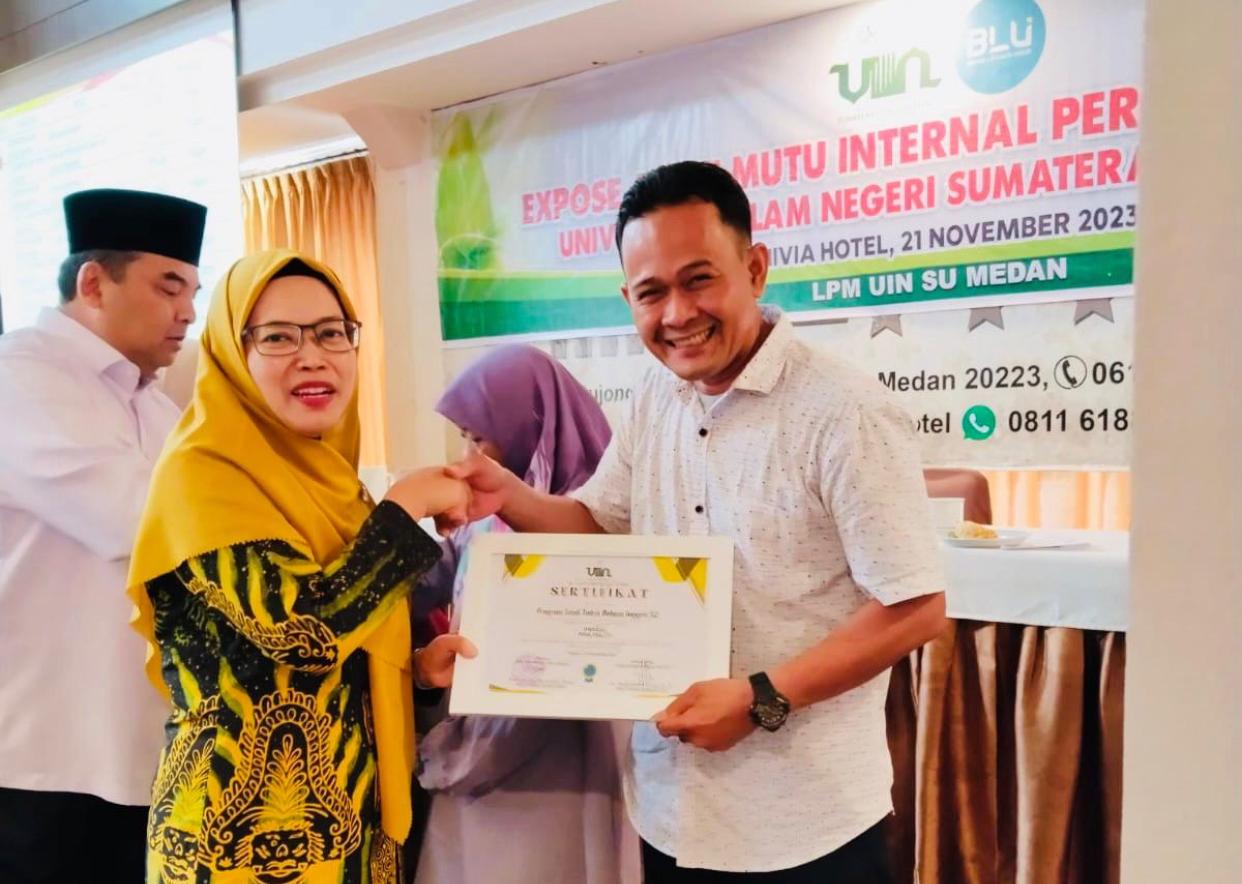
Toward the end of the session, Maslathif Dwi Purnomo, Ph.D. expressed his appreciation to Sukron, Ph.D. for sharing his expertise and inspiring the students to pursue publication with greater confidence and clarity. As a symbol of gratitude, he presented a certificate of appreciation to Sukron on behalf of the Master’s Program in English Education.
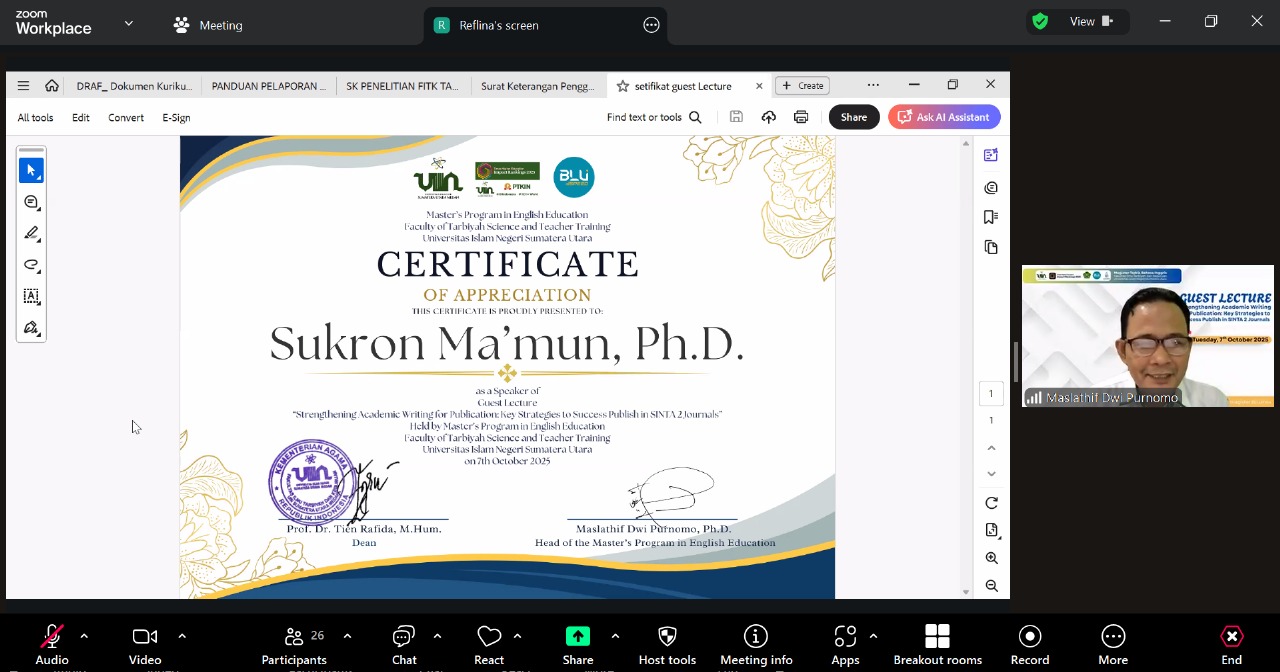
In his closing remarks, Maslathif, Ph.D. reiterated the program’s commitment to equipping students with the competencies needed to succeed in academia and beyond. He reminded students that publication is not merely a graduation requirement but a gateway to professional recognition and scholarly impact.
“We hope that today’s lecture motivates you to transform your research into impactful publications. Remember, each article you publish is not only a reflection of your academic growth but also a contribution to the advancement of English education,” he concluded.
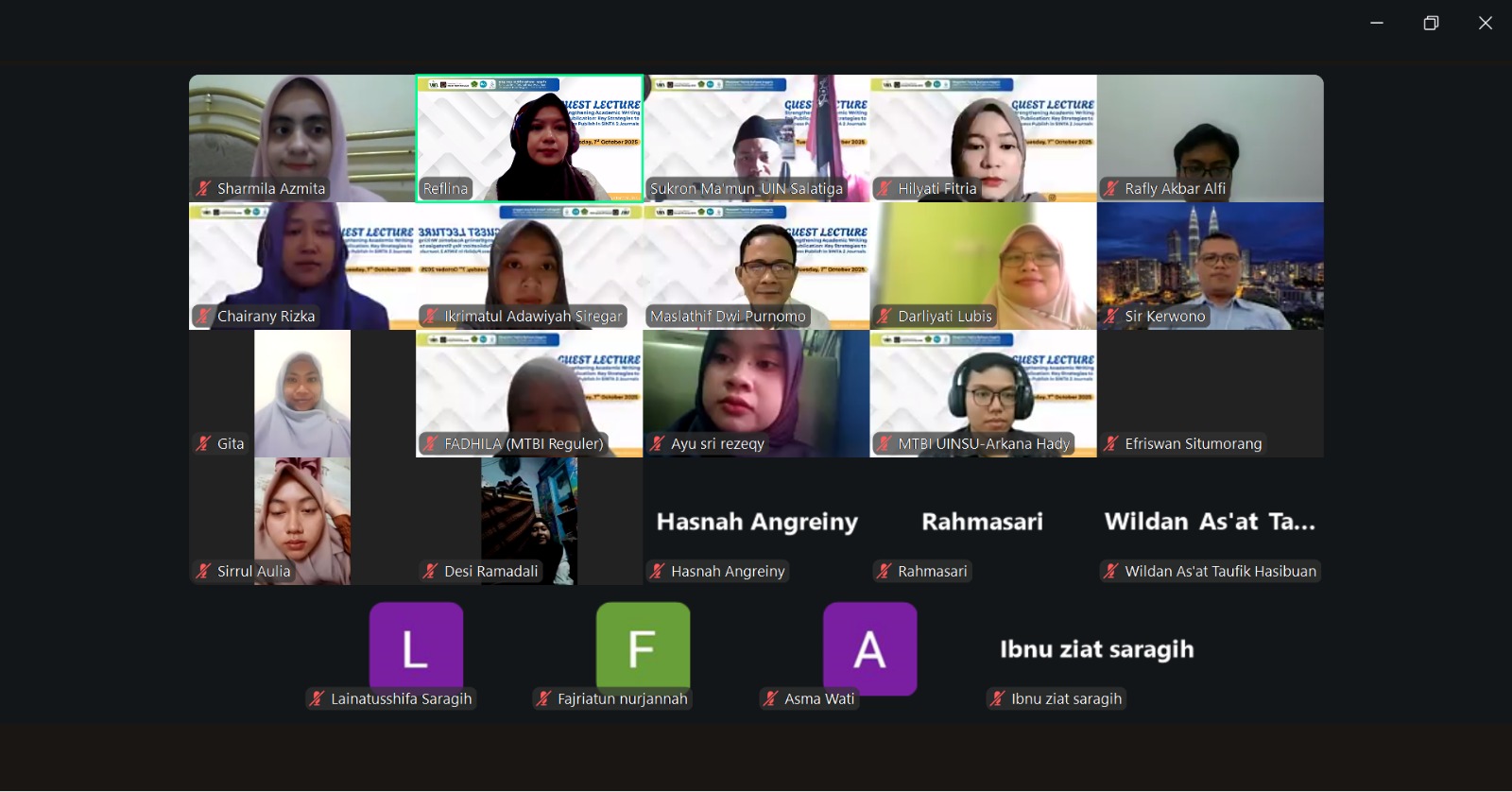
The guest lecture successfully combined theoretical knowledge with practical guidance, providing participants with a comprehensive understanding of what it takes to publish in high-quality journals. It also reflected MTBI UINSU’s continuous efforts to support students’ academic and professional development through meaningful scholarly activities.
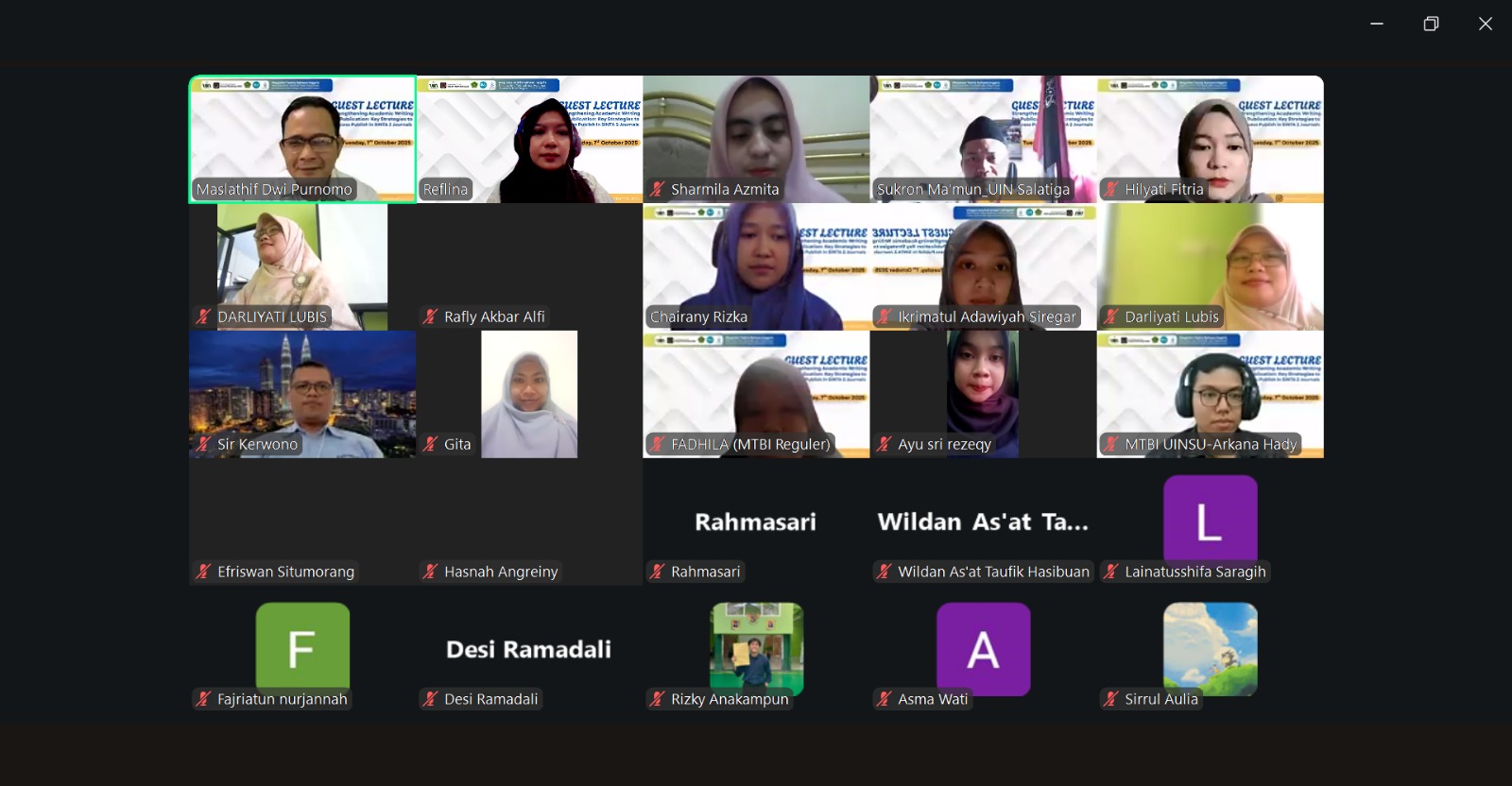
With such initiatives, the Master’s Program in English Education at UINSU reaffirms its vision to become a leading postgraduate program in Southeast Asia by 2025, producing independent, innovative, and globally competitive scholars in the field of English language education.