
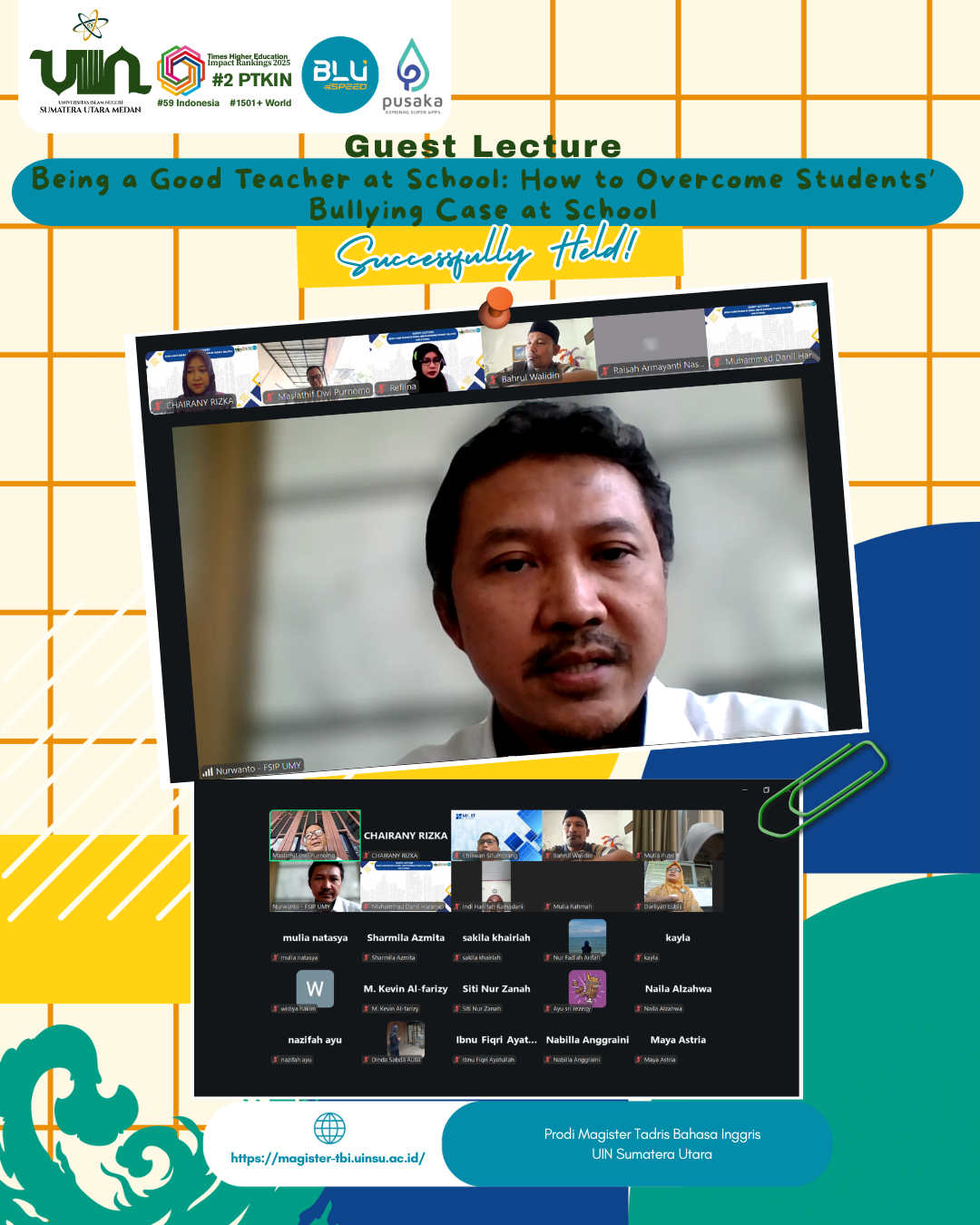
Medan, 13 April 2026 – The Master’s Program in English Education, Faculty of Tarbiyah Science and Teacher Training (FITK), UIN Sumatera Utara Medan, successfully organized an online Guest Lecture entitled “Being a Good Teacher at School: How to Overcome Students’ Bullying Case at School” on Monday, 13 April 2026. Conducted via Zoom Meeting, the event brought together graduate students, lecturers, and education practitioners to discuss one of the most pressing challenges in contemporary education: bullying in schools.
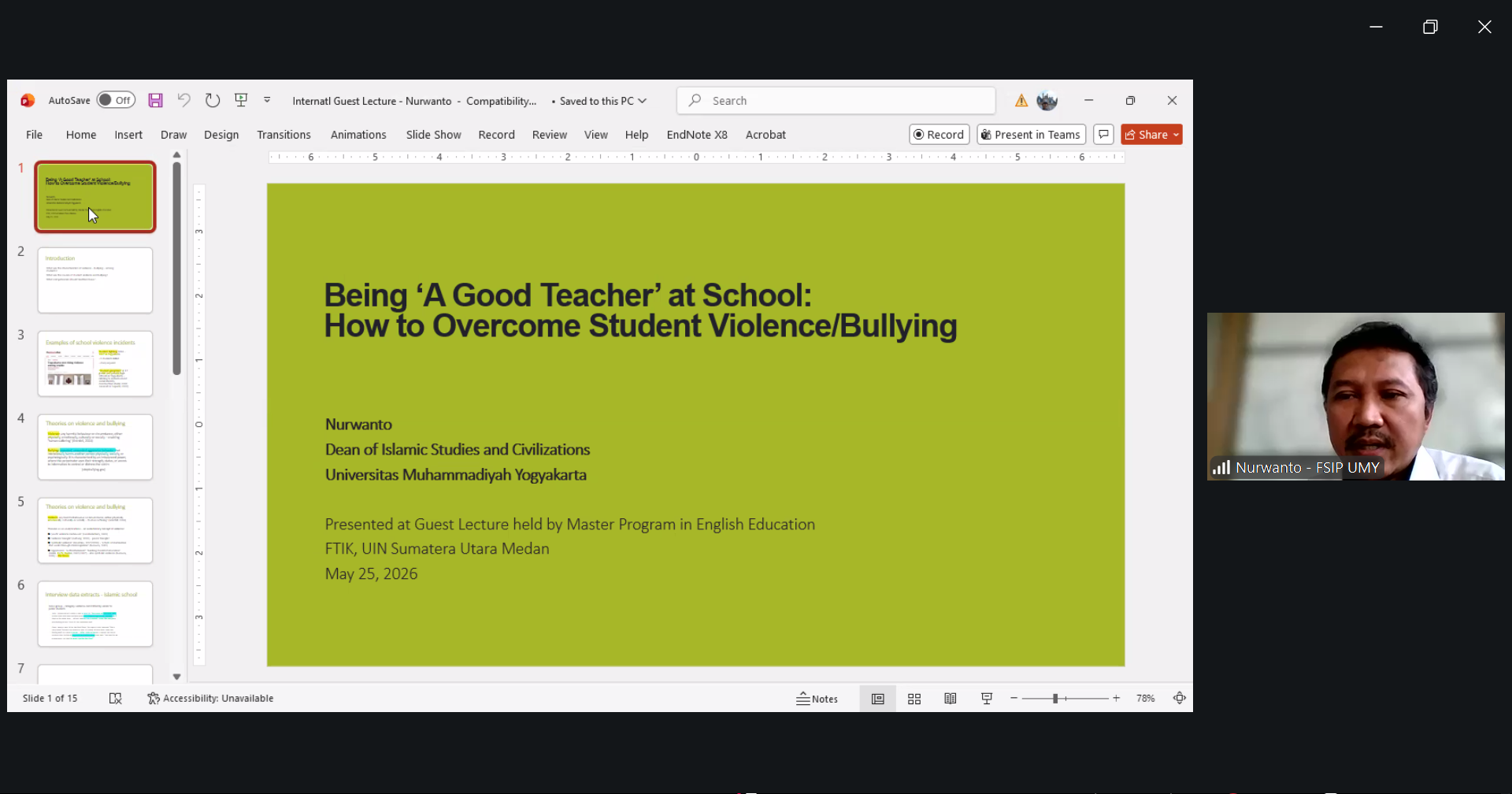
The guest lecture featured Nurwanto, S.Pd., M.Ed., Ph.D., Dean of the Faculty of Islamic Studies and Civilization at Universitas Muhammadiyah Yogyakarta (UMY), as the keynote speaker. Drawing on his extensive academic and professional experience in education, Nurwanto shared valuable insights into the role of teachers in preventing, identifying, and addressing bullying incidents in educational settings.
The event was organized as part of the Master’s Program in English Education’s commitment to enriching students’ academic perspectives through collaboration. The topic was highly relevant, considering the increasing concerns about bullying and its impact on students’ psychological well-being, academic performance, and social development.
Opening Session
The program commenced with an opening session attended by students, lecturers, and invited participants. The moderator welcomed the audience and introduced the objectives of the guest lecture. Participants were encouraged to actively engage in the session and reflect on the crucial role educators play in creating safe and inclusive learning environments.
Speech from the Head of the Master’s Program in English Education
The event continued with welcoming remarks from Mr. Maslathif Dwi Purnomo, Ph.D., Head of the Master’s Program in English Education, FITK UIN Sumatera Utara. In his speech, he expressed his appreciation to the guest speaker for sharing his expertise and experiences with the academic community of the program.
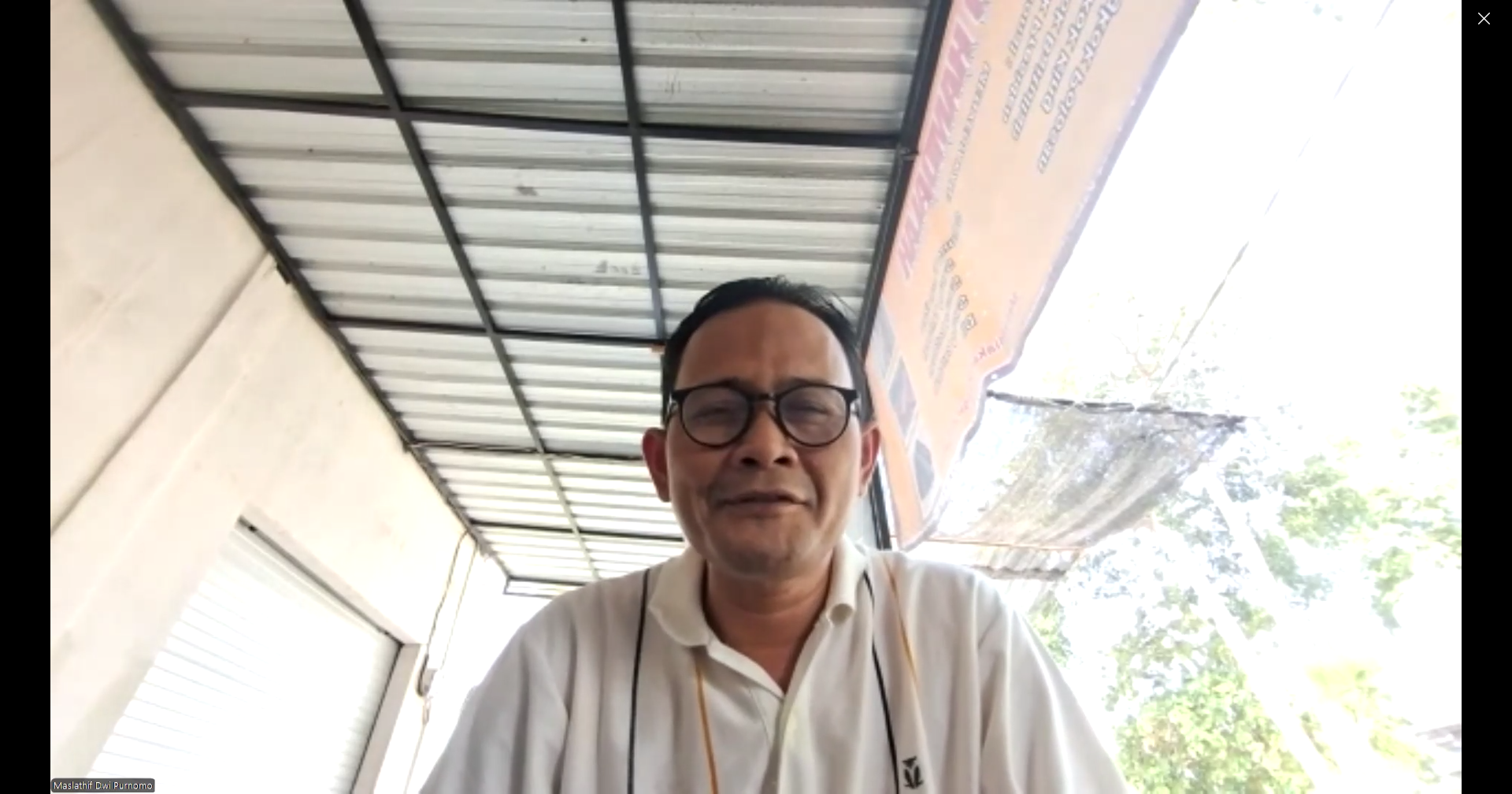
Maslathif emphasized that bullying remains a significant issue in schools worldwide and that educators must be equipped with both theoretical understanding and practical strategies to address it effectively. He highlighted the importance of fostering empathy, respect, and positive communication among students while strengthening teachers’ capacities to manage classroom dynamics and student behavior.
Furthermore, he encouraged participants to maximize the opportunity to learn from the guest speaker and engage in meaningful discussions that could contribute to their future roles as educators, researchers, and educational leaders.
Main Presentation by the Speaker
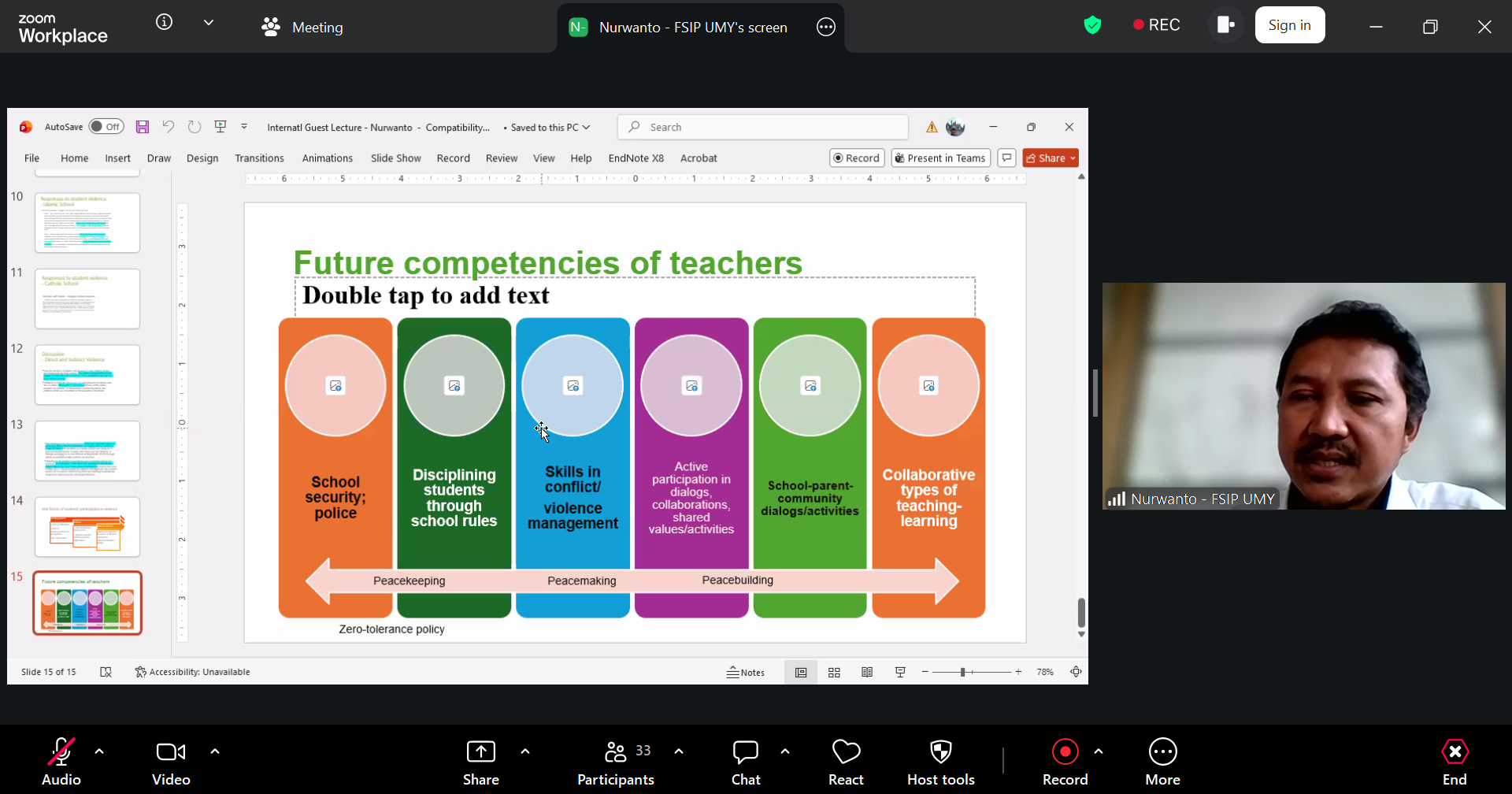
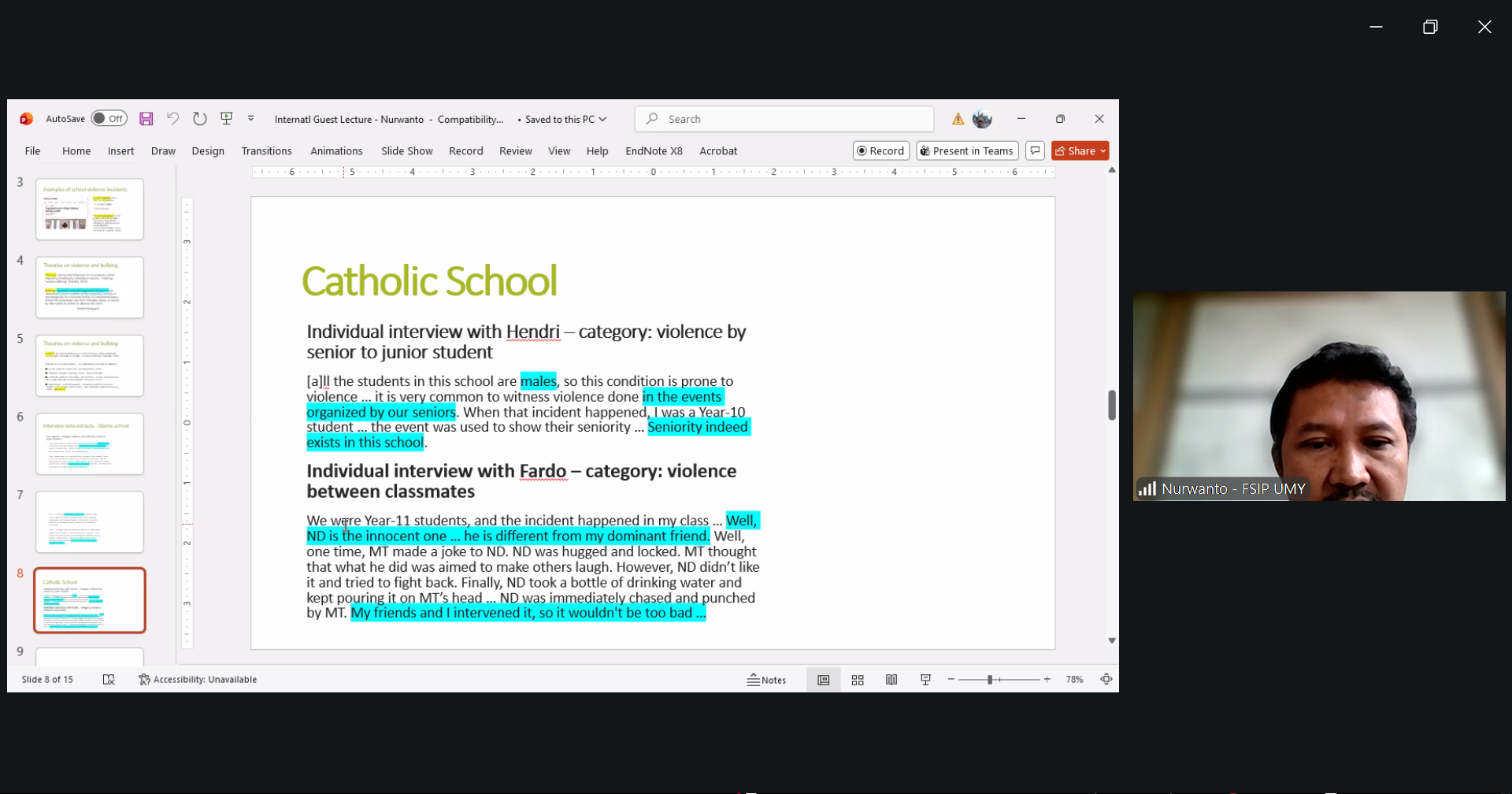
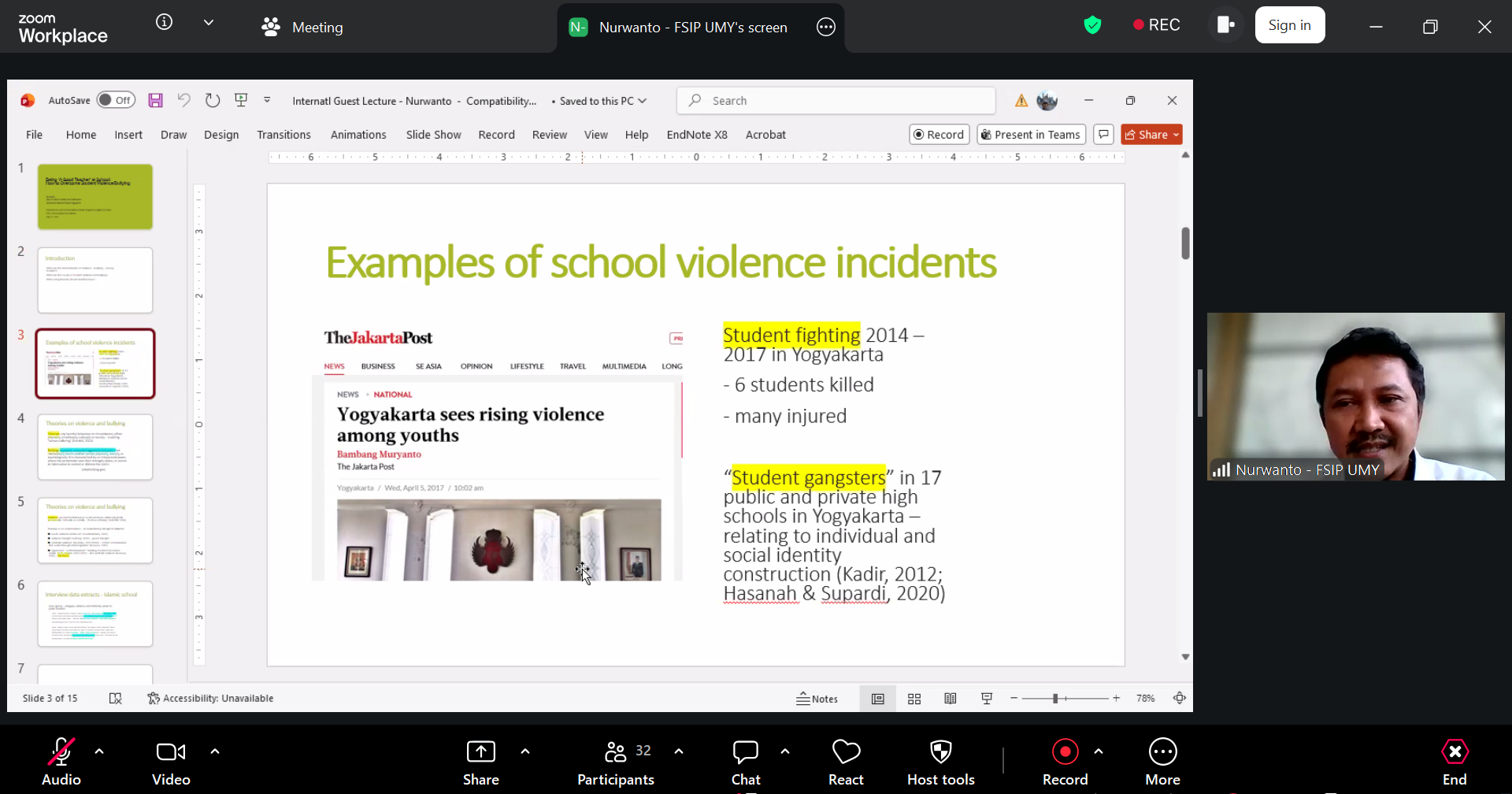
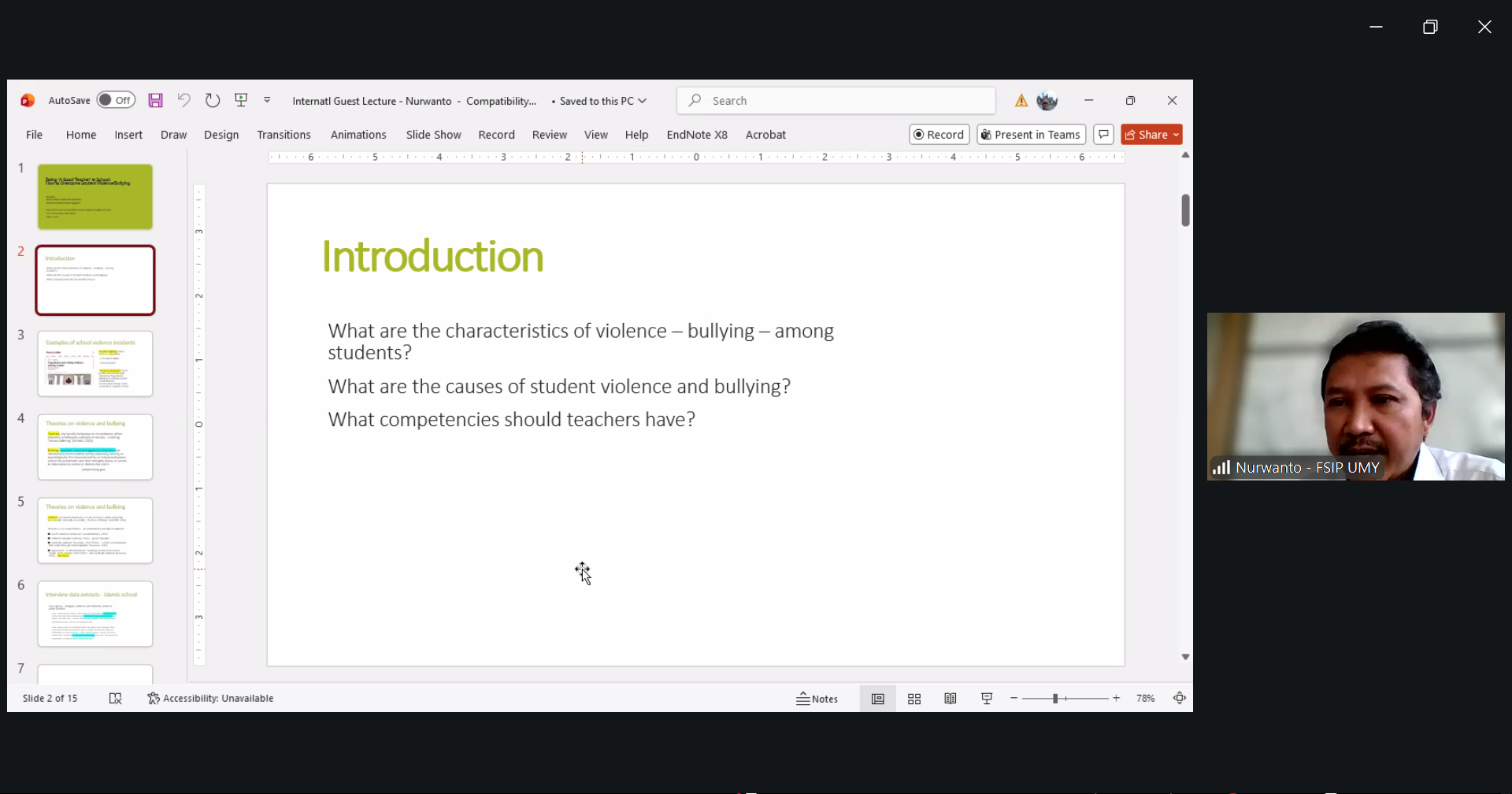
The highlight of the event was the presentation delivered by Nurwanto, S.Pd., M.Ed., Ph.D.. In his engaging and insightful lecture, he explored the various forms of bullying commonly found in schools, including physical, verbal, social, and cyberbullying.
Nurwanto explained that bullying is not merely a disciplinary issue but also a complex social and psychological phenomenon that requires comprehensive intervention. He discussed the characteristics of victims, perpetrators, and bystanders, emphasizing that all stakeholders in the school community share responsibility for preventing bullying.
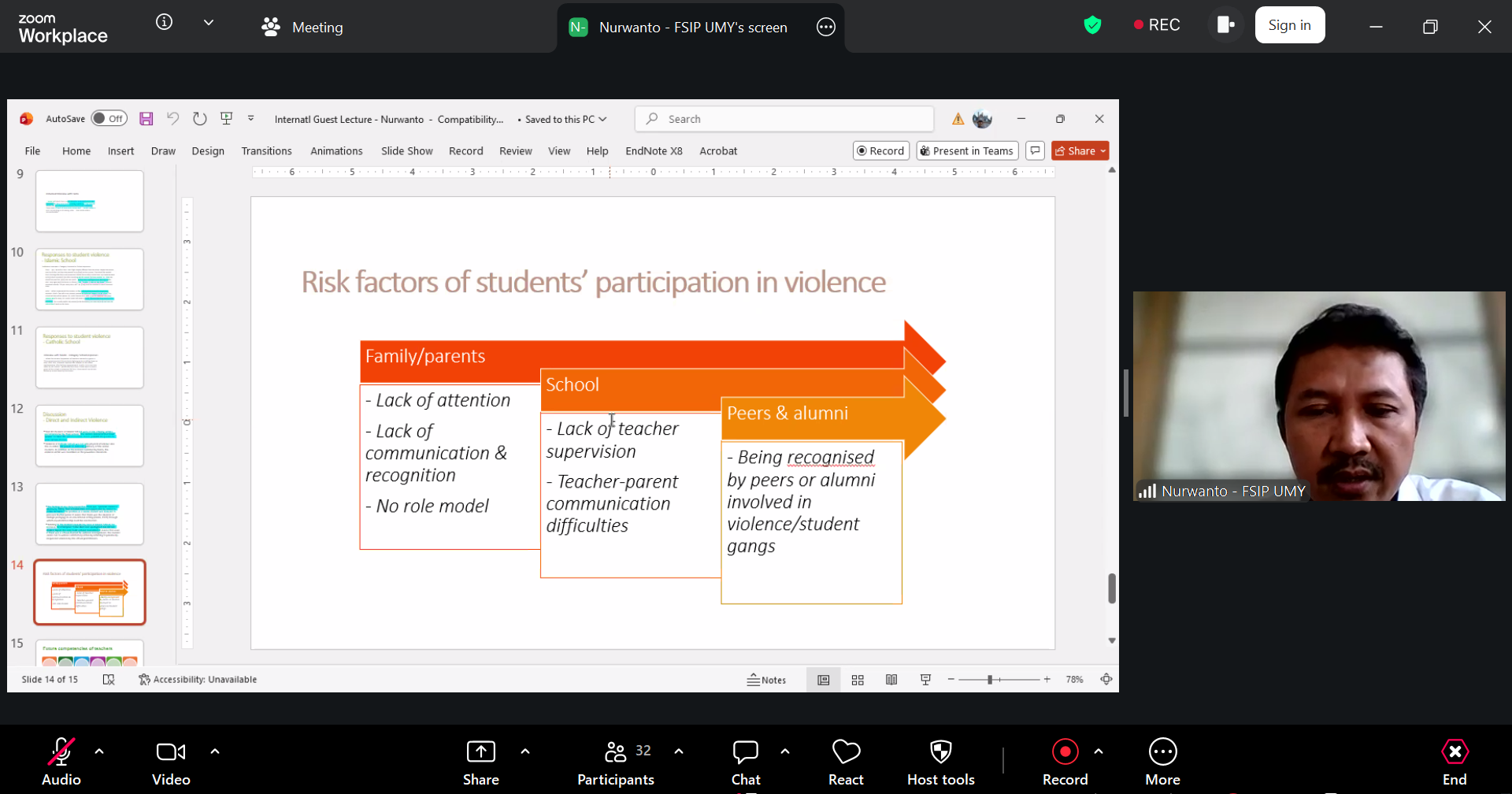
During the session, participants learned about the factors contributing to bullying behavior, including family background, peer influence, school culture, and exposure to violence in media and society. He also highlighted the long-term consequences of bullying, which may include anxiety, depression, low self-esteem, academic difficulties, and social isolation.
One of the key messages of the presentation was the importance of creating a positive school climate where students feel safe, respected, and valued. Teachers, according to Nurwanto, must serve not only as instructors but also as mentors, role models, and advocates for students’ well-being.
The speaker also shared practical strategies for preventing and addressing bullying cases, such as implementing clear anti-bullying policies, promoting character education, encouraging open communication, and involving parents in prevention efforts. Through real-life examples and case discussions, participants gained a deeper understanding of effective intervention techniques that can be applied in educational settings.
Discussion and Question & Answer Session
The lecture was followed by an interactive discussion and Question & Answer session. Participants enthusiastically raised questions related to classroom management, cyberbullying prevention, parental involvement, and the challenges teachers face when handling bullying incidents.
Nurwanto provided thoughtful responses and practical recommendations, emphasizing the need for collaboration among teachers, parents, school administrators, and students. The discussion created a dynamic learning atmosphere and allowed participants to connect theoretical concepts with real-world educational challenges.
Delivering Certificate of Appreciation
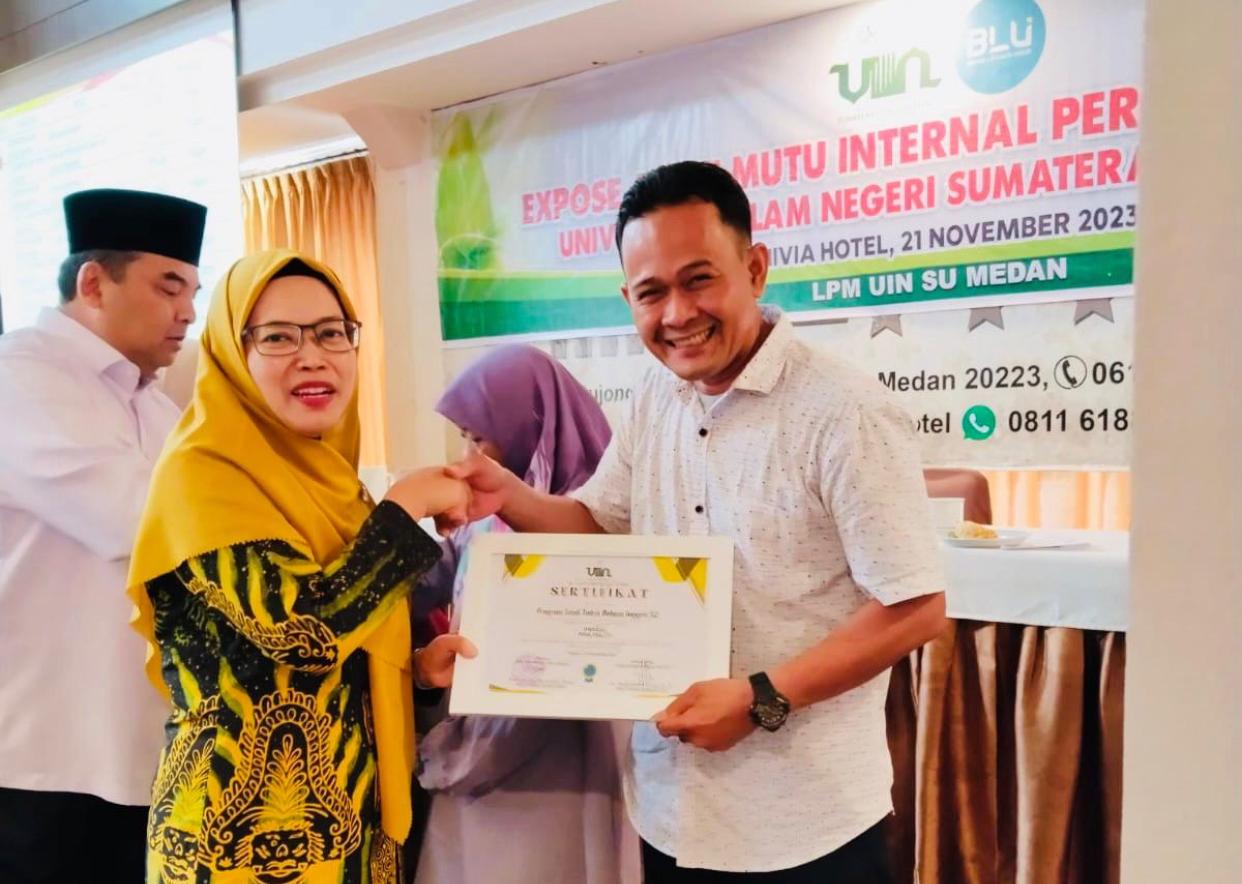
As a token of gratitude for his valuable contribution, the committee presented a Certificate of Appreciation to Mr. Nurwanto. The certificate symbolized the institution’s recognition of his dedication to advancing educational knowledge and supporting the professional development of future educators.
Documentation Session
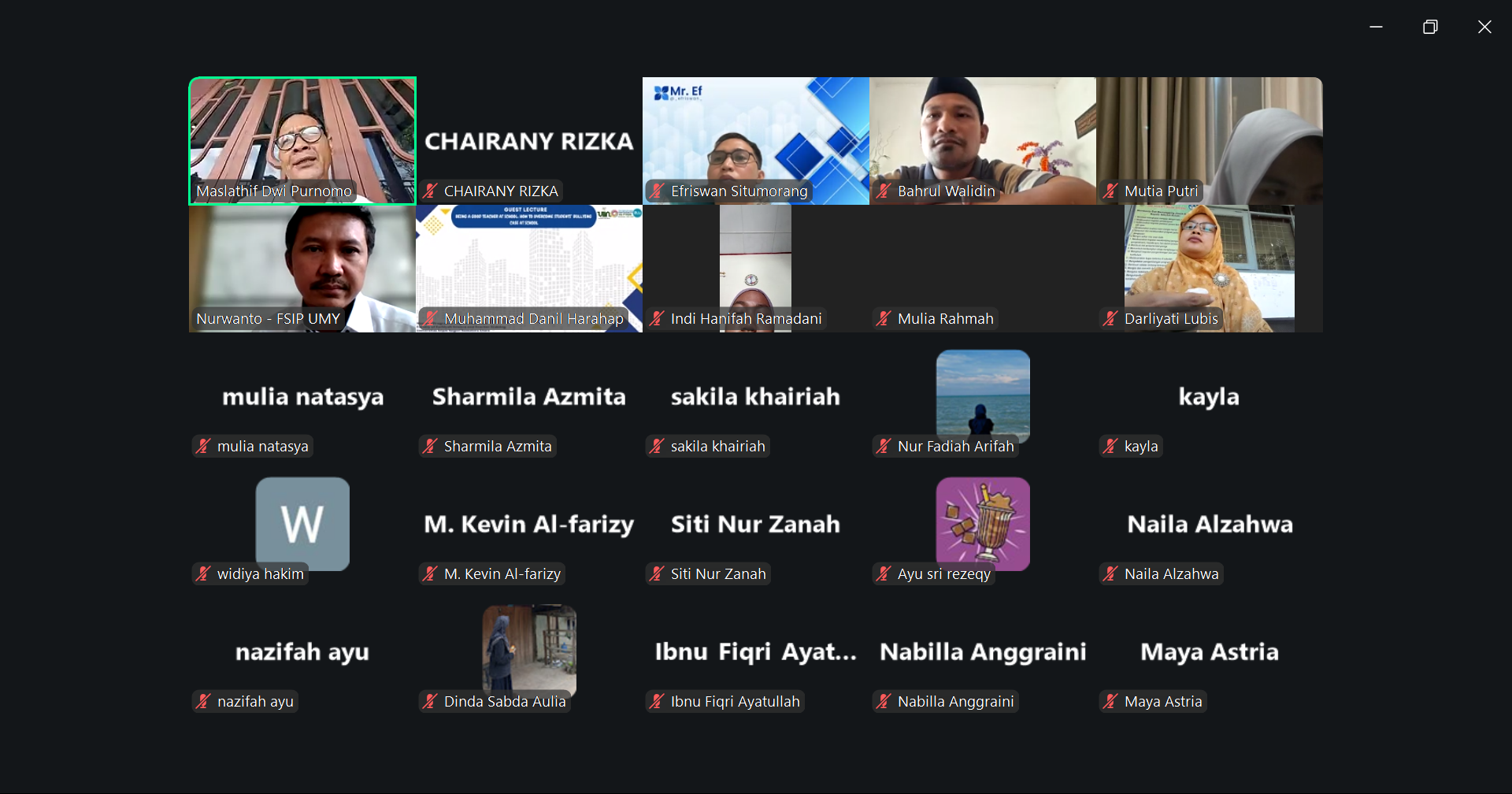
Following the formal proceedings, participants joined a documentation session. Screenshots and group photographs were taken virtually to commemorate the successful implementation of the guest lecture and to capture the spirit of academic collaboration and engagement among participants.
Closing Session
The event concluded with a closing session in which the moderator summarized the key insights gained throughout the lecture. Participants expressed appreciation for the valuable knowledge and practical perspectives shared by the speaker.
Through this guest lecture, the Master’s Program in English Education reaffirmed its commitment to providing meaningful academic experiences that address contemporary educational issues. The event not only enhanced participants’ understanding of bullying prevention and intervention but also strengthened their awareness of the vital role educators play in fostering safe, inclusive, and supportive learning environments.
The program looks forward to organizing more academic forums and guest lectures in the future to support the continuous professional growth of students and educators while contributing to the advancement of quality education.